October 11
Morning Program - 11:15 a.m.
Why I Collect Clocks
Presenter: Greg Hannahs
Old Dominion Chapter No. 34 Member Greg Hannahs will share how he discovered, researched the history and fixed some of his favorite clocks. You will recall from listening to many of his “stories” during our Exhibit “Show and Tell” at the chapter meetings that these are often quite informative and entertaining. The results of his “fixing” are to be admired. Greg hopes there are many questions during his presentation so he can remember what he didn’t include in describing some of his “secret” techniques he used in completing his restorations.
Growing up in a small town, Greg worked in a bicycle shop and at a television shop letterpress printing taught by German craftsmen. After graduation he worked in a large printing company where he learned that Southern Illinois University offered a major in Printing Management. He later pursued graduate studies in time and motion, work simplification and teacher education. In total he worked 50 years in printing, seven of which he taught offset press operation and printing management at Ferris State College in Michigan.
A past president of the Old Dominion Chapter Nos. 34, Greg and his wife, Betty, live in Rockville.
Afternoon Program - 1:30 p.
Using the Watchmaker’s K&D Inverto Staking and
Jeweling Set Plus a Simple Clockmaker’s Staking Set
Presenter: Edwin Fasanella
Chapter Vice President Ed Fasanella will present a “hands-on” demonstration of using the Watchmaker’s K & D Inverto Staking and Jeweling Set along with a simple Clockmaker’s Staking Set.
A long-time member of the Old Dominion Chapter Member, Ed has served twice as Chapter President and is currently serving as Vice President. He enjoys doing research on horological matters and serves as the editor of the NAWCC Research Activities Column in the NAWCC Bulletin.An NAWCC Fellow, Ed and his wife, Barbara, reside in Williamsburg.
August 9, 2026
Morning Program – 11:15 a.m.
Recap: Horological Treasures of Great Britain
Presenters: Jim Girard, Owen Greulich and Stan Palen
The NAWCC 2026 Ward Francillon Time Symposium was held in in England on May 3 - 10 of this year. Locations included London, Greenwich and Cumbria. The activities involved an action-packed schedule highlighting visits to various museums, sites and collections - primarily of horological interest. No doubt, one of the highlights was a “climbing” visit at the House of Parliament to view the tower clock known as “Big Ben”.
Jim Girard, NAWCC member and Horological Association of Virginia (HAV) member of Fairfax Station, Virginia, was a participant in the 65+/- group and took many photographs. He and Owen Greulich have prepared a program which is being shared with the Chapter at the August meeting. Chapter member Stan Palen will be providing the narration.
Several programs which were presented at the Symposium have already been made available to the NAWCC membership. It is likely that these will be shared at future meetings of the Old Dominion Chapter No. 34
************************************************************
Civil War Provenance Watches
Presenter: Dr. Clint Geller
A Live Presentation via Zoom
Dr. Clint Geller is a materials physicist living and working in Pittsburgh PA, as a Senior Advisor Scientist for Materials Design, Inc. He is the author or co-author of three NAWCC books and 20 previous Bulletin articles on the subjects of E. Howard & Co., Waltham, and Civil War provenance watches. Dr. Geller chaired two NAWCC Ward Francillon Time Symposiums, and he guest-curated a special exhibit on Civil War timepieces at the National Watch & Clock Museum in 2019. Dr. Geller was named an NAWCC Fellow in 2009 and a Silver Star Fellow in 2022. He received the NAWCC’s James W. Gibbs Literary Award for excellence in horological literature in 2009.
June 14 2026
Morning Program – 11:15 a.m.
The Hamilton Model 21 Ship’s Chronometer –
A Story About American Horological Engineering at its Best
Presenter: Edwin L. Fasanella
With World War II starting, the U.S. Navy had a critical need for more marine chronometers for navigation. With Switzerland and other traditional chronometer makers cut off due to the war, the Navy turned to the Hamilton Watch Company and the Elgin Watch Company to come up with a solution. Hamilton came up with an impressive design that was able to be mass produced at an unheard-of level (11,000 were produced during World War II) for a precision timepiece.
Ed has restored several dozen of these chronometers over the last few decades and will display a working chronometer and some of its individual parts. Ed does not claim to be an expert repairman of these chronometers, but will gladly take questions after the presentation.
A long-time member of the Old Dominion Chapter Member, Edwin L. Fasanella has served twice as Chapter President. He enjoys doing research on horological matters and serves as the editor of the NAWCC Research Activities Column in the NAWCC Bulletin. An NAWCC Fellow, Ed and his wife, Barbara, reside in Williamsburg.
Afternoon Program - Following Business Meeting
Repairing a World War II Navy Chronometer –
The Iconic Hamilton Model 21
A YouTube Presentation
This is an informative and well-done video on YouTube that shows in detail the disassembly, cleaning and repair of a Hamilton Model 21 chronometer.
***********************************************************
January 8 2026
11:00 a.m. - Morning Program
Clock Trade Sign Restoration Projects:
Project 3, Skipping #1 (Continued), & #2;
plus a Potpourri of New & Old Acquisitions
Presenter: A. James Wynne
Jim’s fascination with clock-related trade signs has resulted in a number of on-going ‘projects’ that represent the various eras of technology-driven trade sign development. Clock trade signs represent advertising extensions of horological craftsmen, their profession, and the evolutionary significance of incorporating time to promote business merchandising. A short recap of the history of clock trade signs, their transition from static to dynamic models is followed by an update of Projects #1 and #2, and a chronicle of Project #3 which will be exhibited as part of the presentation. Time permitting, a potpourri of Jim’s 2025 clock acquisitions and those which were wishful additions will be included in the program.
Jim Wynne is a member of NAWCC’s Old Dominion Chapter No. 34, having served as Vice President of Programs, President, and Executive Board Member; and, giving presentations on his clock travels, projects, and personal interest in antique Sterling Electric car clocks. He is a Professor Emeritus of Information Systems at Virginia Commonwealth University (VCU), retiring after a career of 46 years as faculty member and department chair, research institute director and consultant to the Commonwealth of Virginia’s Department of Education. His hobbies include clocks, antique cars, vintage lighting fixtures, and 19th Century nautical, and English Coaching paintings. He is currently Executive Board Chair for the Historic Farmers Bank in Petersburg (perhaps the only remaining original farmers bank building in Virginia).
Program not given due to Illness.
1:30 p.m. – Afternoon Program
Micro Set Capabilities
Presenter: Stan Palen
The program is a demonstration of some of the capabilities of using Micro Set.
Stan Palen started repairing watches in 1956 while he was still in high school. Now retired as a civilian from the U.S. Navy, he started working there in 1962 as a safety test engineer. Stan has been repairing clocks since 1980.
Stan is a member of NAWCC, Inc., the Horological Association of Virginia and the American Watchmakers – Clockmakers Institute. He has served as Treasurer of HAV for a number of terms. Stan assists at our chapter meetings by taking care of the audio-visual needs. He and his wife, Mary, live in King George.
October 12 2025
Making a Pinion
Presenter: Marty Hutto
Old Dominion Chapter No. 34 Member Marty Hutto will present the theory and machining of the process.
Marty and his wife Elaine reside in Chesapeake and both are long-time Chapter members. Marty served as On-Site Registration Chair for the NAWCC 2021 National Convention held in Hampton and hosted by the Old Dominion Chapter No. 34.
Inside the James Arthur Collection:
Patek Philippe Grand Complications
Video Presentation by Roland Murphy
The video presentation takes a look at some of the watches in the Patek Philippe collection once owned by noted horological collector James Arthur.
Roland Murphy founded the RGM Watch Company in 1992. The company keeps the great traditions of fine Watchmaking, with modern manufacturing coexisting with antique, hand-operated machinery.
Mr. Murphy began his journey in horology at the Bowman Technical School in Lancaster, Pennsylvania. Seeking to deepen his expertise, he continued his education at the prestigious WOSTEP program in Neuchatel, Switzerland - a global center for traditional watchmaking. Murphy launched his professional career in 1987 with the Hamilton Watch Company, where he quickly rose through the ranks to become Technical Director of product development. Driven by a passion for American craftsmanship, he founded RGM Watch Co. in 1992 in Mount Joy, Pennsylvania. In 2007, RGM achieved a historic milestone by introducing the first high-grade mechanical movement produced in series in the United States since 1969 - reviving a proud tradition of American watchmaking and positioning RGM as a leader in the modern resurgence of domestic horology.
August 10, 2025
11:00 a.m. - Morning Program
Clock Gear Teeth Damage
Presenter: Stan Palen
The presentation covers clock gear teeth damage with emphasis on the following:
Stan Palen started repairing watches in 1956 while he was still in high school. Now retired from the U.S. Navy, he started working there in 1962 as a safety test engineer. Stan has been repairing clocks since 1980.
Stan is a member of NAWCC, Inc., the Horological Association of Virginia and the American Watchmakers – Clockmakers Institute. He has served as Treasurer of HAV for a number of terms. Stan assists at our chapter meetings by taking care of the audio-visual needs. He and his wife, Mary, live in King George.
1:30 p.m. - Afternoon Program
A Chronograph Collection
from the 1800s to 1980s - Part 2
Presenter: David Hughes
Items from the personal collection of David Hughes will be highlighted with images and descriptions. The earlier part of this program was presented at the August 2024 Chapter Meeting.
Old Dominion Chapter No. 34 Vice President David Hughes is a native of Pittsburgh, Pennsylvania, and attended college at the University of Dayton in Ohio. Graduating with a BS in Chemical Engineering, he started work at Westinghouse Electric Corp. in the Nuclear Service Division, servicing nuclear power plants domestically and abroad. His next career opportunity was the utility side of the business in Tennessee, then in New Jersey. Dave and his family then moved to Williamsburg where he tried the commercial side of the ethanol business and worked his way to President and General Manager. After that business met the commercial demand, he started working for Day & Zimmermann with their Projects and Construction Group. He retired in 2019.
Dave joined NAWCC in 2019 after receiving his great grandfather’s pocket watches, one being a relatively rare Hamilton railroad model. To quote Dave, “my addiction started!!”
June 8, 2025
Program #1 11:00 a.m. - Morning Program
A Sundial Indulgence
Presenter: Jack McBroom
Chapter Member Jack McBroom reports that his growing interest in clocks had broadened to include time more generally and to its measurement. He became fascinated with sundials and their numerous forms and applications. Jack acquired several basic books on sundials and their construction. He and his wife Ann neared their target of retirement at the end of 2000 and had acquired property in the Shenandoah Valley where they were planning to build a home. This location provided a suitable site for Jack to yield to his latest indulgence: to design a sundial which was large enough and would be placed such that it could be viewed from inside the house. Not being a craftsman himself, Jack would require the components to be professionally fabricated. These components would be put in place on site according to his design. Also, having only a layman’s knowledge of astronomy, Jack would need to rely on published tables and Excel to create the required data set. Jack and Ann had about a three-year ‘window’ for completion of the entire project. This program presents the sundial portion of the project.
Jack McBroom was born, raised and educated in Oklahoma. Both Jack and his wife Ann taught basic sciences to medical students throughout their careers. They met when both were teaching in Kuwait and were married a few years later. After serving in various international locations, they retired to Virginia in 2003.
About that time, Jack and Ann developed their interest in clock collecting and joined NAWCC. Ann enjoys doing research on some of the makers of their clocks. Jack has concentrated on learning about the various movement types.
Program #2 - Following Business Meeting
International Time Recorder Clocks and
A Brief History of the
International Business Machines (IBM) Company
Presenter: Ed Schmidt
The program shows some of the International Time Recorder clocks in Mr. Schmidt’s collection as well as a brief history of the International Business Machines (IBM) Company.
Ed Schmidt worked for IBM for 33 years and during that time became very interested in the company’s history. As a salesman early in his career, Ed found that many of his customers had “old” IBM memorabilia, some of which he was able to purchase. He bought his first Time Clock from a neighbor in 1977. The clock was just a case, and the neighbor had made it into a planter. Ed bought the case and then travelled to New York City to purchase a Seth Thomas set of works. Since then, he has bought, sold and fixed where possible a number of International Time Recorder clocks. He also has studied the company’s history and the various products they produced.
Ed lives in Williamsburg and is a neighbor of Past President Bill Talbot. By the way, we understand Bill is not the neighbor who transformed the clock case into a planter.
February 9,2025
Program #1 11:15 a.m.
Laser Weld Repair for Gold Jewelry
Presenter: Doug McLean
Laney’s Diamonds and Jewelry Williamsburg
The guest speaker is Doug McLean of Laney’s Diamonds & Jewelry located in New Town in Williamsburg. Doug has been serving the Williamsburg area since 1980 and is a member of the American Gem Society. Laney’s Diamonds & Jewelry specializes in custom designed jewelry and jewelry repair and also provides weld repair along with watch repair.
Doug will show videos of laser weld repair for gold items.
12:00 Noon Lunch
1.00 p.m. Business Meeting
1:30 p.m. Program #2
Program #2 – Following Business Meeting
Polishing and Burnishing of Clock Pivots.
Presented by Stan Palen
The presentation covers the various methods and polishing tools for clock pivots. The results are observed with various levels of magnification.
Originally presented by Allan Mears of the Potomac Guild of the Horological Association of Virginia (HAV), the program concludes with Mr. Mears best practices recommendations.
Stan Palen started repairing watches in 1956 while he was still in high school. Now retired from the U.S. Navy, he started working there in 1962 as a safety test engineer. Stan has been repairing clocks since 1980.
Stan is a member of NAWCC, Inc., the Horological Association of Virginia and the American Watchmakers - Clockmakers Institute. He has served as Treasurer of HAV since 1986. Stan assists at our chapter meetings by taking care of the audio-visual needs. He and his wife, Mary, live in King George.
Auction - Following Program #2
Former Chapter Member Hugh D. Terhune of Chesterfield recently turned 95. He stated, “it’s now time for someone else to enjoy these things that have given me so much pleasure over the years”.
Hugh is donating items and tools from his collection for Auction with the proceeds going to the Chapter Treasury.
Included are:
Chapter Member Rick Robinson will conduct the Auctions.
December 8 2024
Program #1 11:15 a.m.
A Handmade Verge Fusee Clock Wach
A Very Strange Piece to be Sure!!
Presenter - Edwin L. Fasanella
Old Dominion Chapter Member Edwin L. Fasanella is a long-time member of the Chapter and has served twice as Chapter President. He enjoys doing research on horological matters and serves as the editor of the NAWCC Research Activities Column in the NAWCC Bulletin. An NAWCC Fellow, Ed and his wife, Barbara, reside in Williamsburg.
Program #2 – Following Business Meeting
How to Open Your Wrist or Picket Watch . . .
and When you Should Leave it to an Expert!!
Presenter - Edwin L. Fasanella
Ed will present a workshop demonstrating the proper way to open your wrist or pocket watch and will offer some timely advice as to when the matter is best left to a professional.
*******************************************************************************************************
October 13 2024
Program #1 – 11:15 a.m.
Rewaxing and Resilvering Clock Dials
This is a hands-on workshop led by Chapter Member Rick Robinson wherein members will actually learn how to perform this facet of clock repair. If you have dials that need rewaxing or resilvering, please bring them to the meeting. Rick will
show you how to perform the process.
Program #2 – Following Business Meeting
Glass Cutting
The workshop is also led by Rick Robinson wherein members will learn how to perform glass cutting for clocks. Both round and rectangular glass cutting will be demonstrated. Please bring any glass panels you need replaced to the meeting. Rick will assist you in cutting the glass.
August 11, 2024
A Chronograph Collection from the 1800s to 1970s
Parts 1 and 2
Presenter - David Hughes
Old Dominion Chapter No. 34 Vice President David Hughes is a native of Pittsburgh, Pennsylvania, and attended college at the University of Dayton in Ohio. Graduating with a BS in Chemical Engineering, he started work at Westinghouse Electric Corp. in the Nuclear Service Division, servicing nuclear power plants domestically and abroad. His next career opportunity was the utility side of the business in Tennessee, then in New Jersey. Dave and his family then moved to Williamsburg where he tried the commercial side of the ethanol business and worked his way to President and General Manager. After that business met the commercial demand, he started working for Day & Zimmermann with their Projects and Construction Group. He retired in 2019.
Dave joined NAWCC in 2019 after receiving his great grandfather’s pocket watches, one being a relatively rare Hamilton railroad model. To quote Dave, “my addiction started!!”
June 9, 2024
Collecting for Fun and No Profit
Presenter - Jack McBroom
Chapter Members Jack McBroom and his wife, Ann, are residents of Williamsburg and have been chapter members for several years.
Jack was born, raised and educated in Oklahoma. Ann was born, raised and educated in Britain. They both taught basic sciences to medical students throughout their careers. The two met 45 years ago when both were teaching at Kuwait University Faculty of Medicine and were married five years later. They spent some 15 years in Kuwait, relocated to the United Arab Emirates Medical Faculty in Al Ain, Abu Dhabi when Kuwait was invaded by Iraq. After five years in the UAE, they again relocated, this time to Grenada, West Indies at St. George’s University Medical Faculty. After a five-year stint there, they retired to Virginia in 2001.
Only then did Jack and Ann develop their interest in clock collecting, and they joined the NAWCC in 2005. They consider themselves merely teenagers in the horology sphere. Ann has concentrated her efforts in researching some of the makers of their clocks. Jack has concentrated on learning as much as possible about the various movement types and in his words “has tried to do as little damage as possible to those wonderful machines”.
General Movement Servicing - Part 4
Video Presenter – Ken DeLucca
April 14, 2024
Math Concepts We Learned from Clocks
Presenter - Jeff Wilson
Since the majority of clocks are now digital, children are often not taught how to tell time with an analog clock. Learning the clock dial has taught us empirical understanding of many mathematical concepts that seem to be eluding the younger generations.
Jeff is an Old Dominion Chapter No. 34 member and resides in Newport News. He will discuss some of the concepts he has observed that can be learned from the clock and perhaps others can suggest other reasons why analog clocks need to be more common.
General Movement Servicing - Part 3
Video Presenter – Ken DeLucca
February 11 2024
General Movement Servicing - Part 1 and 2
Video Presenter – Ken DeLucca
About the Presenter -
Ken DeLucca
Ken DeLucca is the Director of Education at the NAWCC School of Horology in Columbia Pennsylvania. A graduate of the NAWCC School of Horology Clock Repair Program, he also has a graduate diploma in the Conservation of Clocks from West Dean College of Arts and Conservation in the United Kingdom.
Ken has worked in two local clock repair centers in the Columbia area for more than ten years in a part time position - one an antique shop, the other a jewelry store. Along with a Certificate of Museum Studies from the University of Delaware, his exposure to clockmaking has been wide and far. A member of the NAWCC for more than twenty years, he recently retired from teaching a technical subject (electronics and related courses) after more than 36 years.
December 10 2023
Program #1 11:15 a.m.
Watch Cases and Their Makers
Speaker: Edwin L. Fasanella
Since a watch movement is delicate, a case was always needed. In many instances,
the case is more valuable than the movement, especially if precious metals were
used. Ed will provide an overview of the history of watch cases and watch case
makers starting with early cases made in Europe and the United States. Early cases were often made by silversmiths or goldsmiths in small quantities.
Ed describes how to date the period and identify the maker of early cases by hallmarks and trademarks, if present, or by the style. Since collectors desire original cases, methods to determine original or a re-case will be discussed. Ed will present information on fakes and forgeries of cases, especially fake gold marks.
Ed is a long-time member of the Old Dominion Chapter No. 34 and has served twice as Chapter President. He enjoys doing research on horological matters and serves on the NAWCC Research Committee. He and his wife Barbara reside in Williamsburg.
Program #2
Following Business Meeting
Accidentally Preserved:
“The House of Wonders” (1931) – The Elgin Watch Company
A Video Presentation
The video is available by loan of Chapter member Marty Hutto.
October 8 2023
Program #1 11:15 a.m.
Designing and Making a Leaf Pinion for a Verge Fusee Watch Continued
Speaker: Marty Hutto
Program #2 Following Business Meeting
An English Musical Tall Case Clock made by
Francis Eck, Northampton, circa 1777
Speaker: Stan Palen
Stan is a long-time Chapter member and is the Chapter’s audio-visual expert. He, along with Michael Tyler, managed the AV requirements at the 2021 NAWCC National Convention in Hampton. Stan is also active in the Horological Association of Virginia and the American Watchmakers-Clockmakers Institute. Retired from the Naval Surface Warfare Center in Dahlgren, Stan and his wife live in King George.
August 13, 2023
Program #1 11:15 a.m.
Designing and Making a Leaf Pinion for a Verge Fusee Watch
Speaker: Marty Hutto
Program #2 Following Business Meeting
Show and Tell
We all have tools, gizmos, jigs and other items that we’ve made or adapted for use. Bring in the items that you use for repairing and maintaining clocks and watches and describe them to fellow members.
June 9 2023
Guest Speaker
David Gorrell
Millersville, Maryland
and clockmaking throughout the U.S. and Canada. He served three terms as president of NAWCC Philadelphia Chapter No. 1 as well as the Chapter’s secretary/treasurer for nine years. He has also been a four-time chair of the NAWCC Mid-Eastern Regional.
Dave is serving as chair of the Mini-Workshops at this year’s NAWCC National Convention in Lancaster, Pennsylvania. He chaired the same position at the 2021 NAWCC National Convention/Hampton and 2022 NAWCC National Convention/ Dayton.
Program #1 Eli Terry and the Porter Contract
A presentation showing the development of interchangeable parts and mass production in clockmaking.
Program #2 Which Eli was it?
The proof that it was Eli Terry, NOT Eli Whitney who successfully accomplished the first interchangeability of parts in the manufacturing process in America.
April 16 2023
Program #1 – Restoration of a Neglected 1900 Seth Thomas Clock
A video demonstration of the strip down and servicing of a 1900 Seth Thomas Mangle Clock in need of repair. Members will have the opportunity to discuss the demonstration afterward.
Program #2 – Vintage Watch Restoration and
History of a Vulcain Cricket
A video demonstrating the strip down of a Vulcain Cricket. This program is a follow up to a presentation at a previous meeting that introduced a similar Vulcain Cricket.
********************************************
February 12, 2023 Postponed from Dec 11 due to illness.
Program #1
English Brass Lantern Clocks
The program centers around English Brass Lantern Clocks which Jack and his wife Ann collect. They started their collecting in a very undisciplined manner and acquired an eclectic (possibly, motley) group and over time pared the collection down to about the 15 they now have. All of these are British, as was the first clock they owned.
Speaker – Jack McBroom
Jack was born, raised and educated in Oklahoma, and Ann was born, raised and educated in Britain. They both taught basic sciences to medical students throughout their careers. They met 45 years ago when both were teaching at Kuwait University Faculty of Medicine, and the couple married five years later. They spent some 15 years in Kuwait, relocated to the Arab Emirates Medical Faculty in Al Ain, Abu Dhabi when Kuwait was invaded by Iraq. After five years in the UAE, Jack and Ann again relocated this time to Grenada, West Indies at St. George’s University Medical Faculty. After a five-year stint there, they retired to Virginia in 2003.
At that time, Jack and Ann developed their interest in clock collecting and joined NAWCC. They self-describe themselves as merely teenagers in the horology sphere. Ann has concentrated her efforts in researching some of the makers of their clocks. Jack has concentrated on learning about the various movement types, and has tried to do as little damage as possible to those wonderful machines.
Program #2
"Problem Children"
Bring in a challenging clock or watch project(s) for review and discussion.
A panel composed of long-time Old Dominion Chapter No. 34 members with experience in repair and restoration of clocks and watches will be available to make suggestions regarding your projects and lead discussions with the members.
.
Panel Members
Clocks - Rick Robinson, Michael Tyler
Watches - Ed Fasanella, Stan Palen
December 11, 2022
Program #1
English Brass Lantern Clocks
The program centers around English Brass Lantern Clocks which Jack and his wife Ann collect. They started their collecting in a very undisciplined manner and acquired an eclectic (possibly, motley) group and over time pared the collection down to about the 15 they now have. All of these are British, as was the first clock they owned.
Speaker – Jack McBroom
Jack was born, raised and educated in Oklahoma, and Ann was born, raised and educated in Britain. They both taught basic sciences to medical students throughout their careers. They met 45 years ago when both were teaching at Kuwait University Faculty of Medicine, and the couple married five years later. They spent some 15 years in Kuwait, relocated to the Arab Emirates Medical Faculty in Al Ain, Abu Dhabi when Kuwait was invaded by Iraq. After five years in the UAE, Jack and Ann again relocated this time to Grenada, West Indies at St. George’s University Medical Faculty. After a five-year stint there, they retired to Virginia in 2003.
At that time, Jack and Ann developed their interest in clock collecting and joined NAWCC. They self-describe themselves as merely teenagers in the horology sphere. Ann has concentrated her efforts in researching some of the makers of their clocks. Jack has concentrated on learning about the various movement types, and has tried to do as little damage as possible to those wonderful machines.
Program #2
My Method of Reproducing Moldings
for the E. N. Welch “Cary” Clock
Michael will share through a PowerPoint presentation how he recreated the curved parts of the ”sausage” moldings on the side of the case top to replace a damaged part and a poorly recreated part. He will discuss the challenges and show the tools and steps to make the parts. Michael will also talk about using silicon molds and casting resin to recreate the button rosettes.
Speaker: Michael W. Tyler
Michael is a 39-year member of NAWCC and is the recipient of a Fellow award. He served as Chapter Librarian and two terms each as Chapter Vice President, Chapter President and Director. Michael has presented programs and workshops at chapter meetings and has extensive service on the regional and national level.
Michael is retired from Henrico County Division of Fire as a Career Firefighter and Hazmat Specialist with over 30 years of service. Besides clocks, Michael has interests in aviation, genealogy and local history. In 2013, he self-published a book documenting Hanover County’s Confederate Soldiers and released a second edition in 2020.
October 9, 2022
Program
The Making of a Museum – An Update
Speakers
Dennis Stephens and David Brannan
Callao, VA
Chapter members Dennis Stephens and David Brannan of Callao, Virginia, are the speakers at the October meeting. Dennis is the owner of Rappahannock Organ Company in Callao, specializing in the restoration of organs, primarily for churches and theaters.
Dennis and David will provide an informative and interesting presentation on the further development of their museum. They will review the progression of the museum when they first presented as a chapter program in 2018 and discuss new developments as of 2022. As described by David, “we needed more room!”.
The museum involves the transformation of their shop to house both their clock and organ collections. In addition, a large room that will imitate an art deco movie theater will be included. The collection includes a Marr and Coulton theater organ which was in the now extinct Lyric Theater in Richmond.
August 14, 2022
Program #1 – 11:15
My 50-Year Journey through
Clock and Watch Restoration
Speaker: Edwin L. Fasanella
Edwin L. Fasanella of Williamsburg is an NAWCC Fellow and has been a member for over fifty years. During his 40-year NASA career, he published over 125 research papers on impacts spacecraft landing systems and computer modeling. Ed served as president of the Old Dominion Chapter No.34 for two terms. He is the editor of the NAWCC Bulletin “Research Activities & News” column, is an avid horological researcher and has restored hundreds of vintage and antique timepieces.
Program #2
One Man’s Vocation /
One Man’s Hobby
Speaker: Michael Schulman
Michael Schulman relocated to Williamsburg from the New York City area several years ago. A former educator, he and his wife Paula have embraced the area, becoming involved in several activities. His time in retirement has given him the opportunity to become more involved in clock and watch collecting and restoration. Michael is serving as vice president of the Old Dominion Chapter No. 34
June 12, 2022
Program #1 – 11:15 a.m.
Tall Case Clocks in the
Colonial Williamsburg Collections
Speaker: Tara Gleason Chicirda
Gleason Chicirda is the Curator of Furniture at Colonial Williamsburg. Since 2002, Tara has created a number of exhibitions at the Art Museums of Colonial Williamsburg including Keeping Time: Tall Case Clocks and A Gift to the Nation: The Joseph and June Hennage Collection. Prior to coming to Williamsburg, Tara held curatorial positions at the New Jersey Historical Society and the Winterthur Museum where she assisted with an exhibition mounted at the National Gallery of Art in addition to exhibitions in the Winterthur galleries. Her research projects have taken her from Rhode Island to Georgia and she has published widely on American furniture in The Magazine Antiques, The Catalogue of Antiques and Fine Art, the Chipstone journal American Furniture and The Journal of Early Southern Decorative Arts. Her most recent article “Tall Case Clocks in the Colonial Williamsburg Collection” was published in the NAWCC Watch and Clock Bulletin (March/April 2021) and “A Rhode Island Cabinetmaker in Kentucky: Revelations of a Clock Reexamined”, co-authored with Mack Cox and published in American Furniture (2018). Tara is a graduate of Amherst College and holds a Master of Arts degree from the University of Delaware’s Winterthur Program in Early American Culture.
Program #2
AUCTION: Following Business Meeting
Materials from the
Estate of the late Bob Latimer
Auctioneer: Rick Robinson
Bob Latimer of Norfolk was a member of the NAWCC Old Dominion Chapter No. 34 for many years. He was deceased in 2020.
Auctioneer Rick Robinson will be selling materials from Bob’s collection such as clock keys, clock kits, various dials and quartz movements.
The Chapter is grateful to Bob’s widow, Erle Marie Latimer, for the donation of the materials, the proceeds of which will be given to the Chapter.
**************************************************************************************
February 13, 2022
Workshop: Installing Watch Case Crystals
Speaker: Jim Adams
11:15 a.m.
Chapter Member Jim Adams will be demonstrating techniques used in the installation of watch crystals.
Program: Interview of those members bringing items for the Exhibit.
1:30 p.m.
Vice President Rick Robinson will be asking those bringing items to highlight the features of the item and tell a bit of their personal history concerning their areas of interests and what drew them to the world of Horology.
December 12, 2021
Program 1 and 2 : Chelsea Clocks
Speaker: Jim Dyson
11:15 and 1:30
Jim Dyson of Portsmouth will bring several clocks from his collection of Chelsea marine clocks and share their history and characteristics with us. Jim’s collection, which was showcased at the NAWCC 2021 National Convention, represents the finest collection of Chelsea clocks ever assembled. Each piece has a story to be told, as we learned from Jim during the ‘Walk Through’ tour of the Exhibit. Jim will share those stories with us – ranging from the provenance to how he acquired the pieces to why they are special to him.
Jim is a 30-year NAWCC member and a retired U.S. Navy Captain and renowned expert on Chelsea marine clocks. He has researched all facets of Chelsea history and is the author and curator of the “Chelsea Clock Museum”, the online source of Chelsea history and marine clock knowledge.
October 17, 2021
Program #1 – 11:15 a.m.
The Tower Clocks of Fort Monroe
Speaker: Alan Bomar
Fort Monroe sits at the entrance to Hampton Roads and the Chesapeake Bay and served as a U.S. Army post until its deactivation in 2011. As turned over to the Commonwealth of Virginia, the site includes two unmodified tower clocks that are the subject of Alan’s presentation.
Alan has a BME degree from Georgia Tech, is a career shipbuilder at Newport News Shipbuilding, and lives at Fort Monroe. In 2015, he joined the Fort Monroe Authority’s efforts to operate the Fort’s Post Office 1898 Model 5 Tower Clock. In 2018, before the celebrated 2019 First Africans Arrival Commemoration, Alan proposed operating the 1880 Model 15 Tower Clock that is the subject of this lecture. Alan joined the NAWCC five years ago and applies his engineering skills to study horology.
The presentation was made at the luncheon meeting of the Old Timers & Fellows Chapter No. 22 during the NAWCC 2021 National Convention in Hampton.
Program #2 – Following Business Meeting
Ask the Experts
A panel composed of Chapter members, Ed Fasnaella, Stan Palen, Rick Robinson and Michael Tyler will answer your questions about clock and watch collecting. Bring your clock and/or watch and your questions relating to identification to repair to servicing. The local expert panel will do their best to answer your question.
February 9, 2020
Program #1 11:15 a.m.
Watch Science: Inside Omega 321/CH27
A video presentation wherein Michael Michaels examines the Omega 321/CH27 Chronograph wristwatch movement during disassembly. Mr. Michaels discusses and demonstrates the technical aspects associated with this 52-year-old discontinued movement. During disassembly, many elements of the chronograph and their functions are highlighted. Additionally, bench practices are discussed, proving insight into the many details involved in watch servicing.
. .
Mr. Michaels is past Director of Watchmaking and Lead Watchmaker at Govberg Jewelers and currently a Technical Supervisor for Richemont in the Dallas/Fort Worth area. His career in watchmaking started in 2000 and he holds the following certifications: IWC Level 40 Watchmaker (Richemont), Omega Caliber 8500 Watchmaker (Swatch Group), Jaeger-LeCoultre Level 40 Watchmaker (Richemont), ETA 2894-2 Modular Chronograph Service, Omega OWME Certification (OMEGA SA), Breitling Level 1 and 2 (Breitling USA), CW 21 (AWCI), Fleurier Designate Certificate (Chopard), Omega Co-Axial (Swatch Group).
Program #2 Following Business Meeting
The Real Clockworkers of the South Shore
The video made in 2017 details the restoration of the Hingham, Massachusetts New North Church Clock and begins by disassembling the clockwork. Ross Hochstrasser is the lead restorer, assisted by his brother David. The E. Howard weight-driven tower clock, purchased and installed in 1845, had needed maintenance for some time and was non-functional prior to beginning this restoration. The town of Hingham has four tower clocks owned and maintained by the town. All four clocks were in need of restoration and the town council approved funds to carry out the work. The New North Church Clock is the first of the four to undergo restoration.
Ross Hochstrasser began collecting vintage timepieces in the late 1970s as a hobby. It became evident that some knowledge and experience on the repair and maintenance of his collection would be needed. After visiting many clock shops, a brief apprenticeship was attained at the Clock Shop in Scituate Harbor. In 1985, Ross left his job in the electronics industry to pursue a new career in the field of horology. In 1987, Ross and his brother, David, were contracted to restore the historic timepiece at the Custom House Tower overlooking Boston’s skyline. From there, he has pursued many projects large and small.
October 13, 2019
Program #1 – 11:15 a.m.
Program Part 2 Following Business Meeting
Program
Early Advertising Clocks – 1860s to 1930s
Speaker
Bob Kolbeck
Old Dominion Chapter No. 34 Member
Palmyra, Virginia
No discussion on early advertisihg clocks would be complete without including the Baird Clock Company. Edward Payson Baird was an inventor and entrepreneur who took the concept of advertising on a clock from a novelty to a full-fledged business, producing thousands of clocks a year. Bob will discuss the various clocks Baird produced as well as how he made them at reasonable prices.
In the second segment of the presentation, Bob will introduce the ways the major clock companies such as Seth Thomas, New Haven and Ithaca, developed their own advertising clocks in an attempt to capture part of the growing advertising clock market. Some were catalog models, while others appear to have been client specific.
Lastly, although box regulators would ultimately become the preferred clock for advertising, all sorts of other unique formats were tried over the years.
To finish the session, Bob will look at window hangers, countertop displays, cigar cutters, figurals and alarm clocks, as well as a few nicer clocks that were pressed into service as advertisers.
August 11, 2019
Program #1 – 11:15 a.m.
Fixing a Railroad-Style Cuckoo Clock
The video presentation provides a good overview of basic clock repair. It is an excellent tutorial, showing many practical aspects from forming bellows to oiling a clock. It includes polishing a pivot in real time, determining which bearings need re-bushing and hands-on cleaning. Repairing a cracked dial, replacing numbers on the dial and rebuilding bellows with leather are included. In addition, the video is likely to spark some comments and discussion from experts in the room as techniques are debated and “style differences” are identified.
Program #2 – Following Business Meeting
An Incredible Historic Watchmaking Tools Collection
A video featuring the tool collection of Andre Lechot a man who has been collecting and restoring incredible machines and tools used in watchmaking for over forty years. You have probably seen some of the tools while some are a bit more obscure. All of the tools are highly restored to a pristine fit and finish. The presenter provides detailed descriptions of the purpose and function of a sampling of the tools in the collection.
June 9, 2019
Program #1 – 11:15 a.m.
A Visit to the American Clock & Watch Museum
in Bristol, Connecticut
The video presentation features a fascinating trip back in time. Learn about American clock and watchmaking with particular emphasis on Connecticut, once the clock capital of the United States. The museum holds one of the largest displays of American clocks and watches in the world –over 5500! Located in the historic Federal Hill district of Bristol, a portion of the museum is housed in an 1801 Federal-style home with a sundial garden.
About the museum – On October 24, 1952, Edward Ingraham, president of E. Ingraham & Company, invited ten local businessmen to the “Town Club” (now the DuPont Funeral Home) In Bristol, Connecticut to discuss forming a clock museum. Since Bristol had become an industrial town due to its designation as the world’s center of clock manufacturing, it seemed appropriate that a museum be formed to preserve the heritage of the industry for future generations. Although there had been discussion about renovating a home close to the Ingraham factory on North Main Street or constructing a modern facility located nearby, the 1801 home of Miles Lewis located on Federal Hill was purchased and renovated for the museum. Except for the modification of the stairway for safety and the conversion of the carriage shed into an apartment for the caretaker, the original features of the Federal style house were retained.
The Bristol Clock Museum opened its doors to the general public on April 10, 1954. At the time of the opening, there were approximately 300 clocks on display and a small library containing 50 books. The collection grew quickly, and by 1956 a new wing was added to the museum. Named the Ebenezer Barnes Memorial Wing, the addition was financed through the generosity of Fuller F. Barnes in honor of his ancestor, Ebenezer Barnes. The memorial wing was constructed using paneling from the homestead of Ebenezer Barnes, which is believed to be the first permanent residence erected in Bristol. The massive support beams used in this wing were once part of the Lewis Lock Company that was located in nearby Terryville. In 1958, due to the enlarged scope of the collection and the growth of membership, the name of the museum was changed to the American Clock & Watch Museum, Inc.
Continued growth over the next thirty years made it necessary to expand the facility once again and resulted in the construction of the Ingraham Memorial Wing in 1987. The additional 3,000 square foot expansion improved display capabilities and provided a gallery area for the Museum’s gateway exhibit, “Connecticut Clockmaking and the Industrial Revolution”.
Program #2 – Following Business Meeting
Hands-On Day and Silent Movies
The afternoon session will be something a bit different! Hands-On Day will feature a series of stations providing briefings and hands-on opportunities to experience several
topics. Planned stations include:
Watchmaker’s Lathe Basics Conducted by Lee Fischer
Microset Demonstration Conducted by Stan Palen
Glass Cutting Conducted by Rick Robinson
Lantern Pinions Conducted by Michael Tyler
During the session, we will also be showing one or two silent movies, as time permits. The first is a 1931 look at the Elgin Watch Company; the second is a 1922 review of the Illinois Watch Company. These films showcase factory processes and facilities and provide an interesting glimpse into the state of technology and mass production processes that were state of the art in their time. So, whether your interests are hands on or whether you’d rather take a leisurely stroll back through time (or both!), there will be something for you at this session.
April 14, 2019
Speaker – Robert Kolbeck
Old Dominion Chapter No. 34 Member Bob Kolbeck of Palmyra, Virginia is the speaker, sharing his knowledge of early advertising clocks.
Program Part 1 – 11:15 a.m.
Early AdvertisingClocks – Part 1
Part 1 starts with a few comments on why advertising clocks are an interesting collectible and a brief timeline showing when certain innovations appeared. The discussion then turns to clocks used by three of the earliest companies to adopt the idea of advertising on a clock: Geo. W. M. Reed & Co., Geo O. Mulford and S. F. Hess & Co. Each of these companies was trying something new and each approached the advertising clock concept in a slightly different manner. The session concludes with a comparison of “product” clocks versus “business” clocks.
Program Part 2 – Following Annual Business Meeting
Early AdvertisingClocks – Part 2
The session continues with innovative clock designs that used automation to attract attention to the products they were promoting. The first to be discussed will be Andrew Van Woeert Strait’s Sidney Advertising clock. For the Sidney clocks, there will be examples of early “made in Sidney, NY” clocks versus the later and more common “made in Ithaca, NY” clocks and why it made sense to make design changes. A closer look at the tablet art and the paper advertising cards will be shown.
The second automated clock to be discussed will be the Seth Thomas “Flipper”. Although the “Sidney” clocks and “Flipper “ clocks were similar in concept, it appears the companies used different business models which may explain why one was a success and the other most likely a failure.
Lastly, a third “mystery” company appears to have tried to muscle in on the Sidney Advertising Clock Company turf and seems to have had some success in doing so.
February 10, 2019
Program #1
Some “Not Crystal Palace” Clocks
Presented by Michael W. Tyler
Chapter Member Michael W. Tyler will show and discuss several 8-day clocks which are under glass domes, like the Davies Crystal Palace line. These clocks are not seen in any contemporary catalog, so the exact maker is subject to conjecture and further review.
Program #2 – Following Business Meeting
The Remarkable Clocks of Andrew V. Strait
of Sidney, New York
AV Presentation by Russ Oechsle
While the name Andrew V. Strait might not be recognizable to many advertising clock collectors and aficionados, his clocks, generally referred to as “Sidney Advertising Clocks”, surely are. Strait’s story is one of real genius, wherein his skills as \a clock maker merged with his unique ideas on profiting through the medium of advertising to create a new segment in American horology,.
This video presentation by Russ Oechsle, based almost entirely on primary sources, will provide the history of Strait and h is various advertising clock models, as well as lesser known inventions, including what he called the “first electric alarm clock”.
Note: This program was scheduled to be presented at the December 2018 meeting but was postponed due to the inclement weather.
December 9, 2018
Program 1
.William Mitchell, Jr. – Richmond Silversmith
Presented by Edwin L. Fasanella
Chapter Member Edwin L. Fasanella has been working on a research-in-progress on William Mitchell, Jr., a silversmith who moved from Boston to Richmond in the early 1800. His jewelry store (and successor businesses) were located on Main Street in Richmond and produced and sold silverware, watches clocks and even buttons for the Confederacy. His firm continued on as Mitchell and Tyler from 1845 until 1866 and then as John H. Tyler and Co. after that for a few more years. Ed will provide a summary of his findings and interesting side notes regarding Mitchell’s enterprises and products.
Program 2
The Remarkable Clocks of Andrew V. Strait
of Sidney, New York
AV Presentation by Russ Oechsle
While the name Andrew V. Strait might not be recognizable to many advertising clock collectors and aficionados, his clocks, generally referred to as “Sidney Advertising Clocks” surely are. Strait’s story is one of real genius, wherein his skills as \a clock maker merged with his unique ideas on profiting through the medium of advertising to create a new segment in American horology,.
This video presentation by Russ Oechsle, based almost entirely on primary sources, will provide the history of Strait and is various advertising lock models, as well as lesser known inventions, including what he called the “first electric alarm clock”.
October 14, 2018
Speaker - A. James Wynne
Chapter President A. James “Jim” Wynne of Petersburg, Virginia is the speaker for the October Chapter Meeting.
Program #1
A Stroll through Time - A Travel Log of Time Pieces—Part A
During past 12 phases of moon travel, Jim has attended a series of NAWCC Regional Meetings in Ohio and New York, the National Convention in York, Pennsylvania, and most recently the cities of New Orleans, Louisiana, and Richmond, Virginia. In the course of those travels, he collected a photo log representing an eclectic collection of clocks. The program will include interactive segments that will invite member expertise for identification, rarity and appraisals that will be compared to market prices.
Program #2
A Stroll through Time - A Travel Log of Time Pieces—Part B
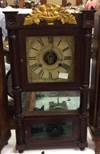
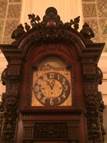
Following the conclusion of Part A, Jim will give a presentation of the Eastern States Regional’s Exceptional Rare Shelf Clocks’ Exhibit including examples by Simon Willard-Roxbury, MA (1753-1848), David Williams-Newport, RI (1769-1823), Joseph Loring (1768-1846), and Benjamin (1794-1857); followed by a documentary of an award-winning craftsmanship re-creation of an exceptional E. Howard commercial clock of which none are known to exist!
Examples of other award winning craftsmanship projects exhibited at the National Convention will also be presented.
August 12, 2018
Program #1
Complicated Projects: In Tune with Time
featuring Watchmaker Masahiro Kikuno
Masahiro Kikuno is a master craftsman who belongs to an exclusive international group of independent watchmakers. These consummate artists create timepieces that reflect their deepest ideals, with no connection to commercial watch manufacturers. Kikuno’s creations are deeply influenced by traditional Japanese culture. He’s fascinated by a masterpiece called the Myriad Year Clock, which was built by a 19th-century Japanese mechanical genius. Containing over a thousand hand-made parts, the clock is a marvel of complex and precise engineering. Kikuno seeks to transcend that old master’s achievement by giving the clock a modern rebirth in the form of an elegant wristwatch.
This video presents Kikuno’s exacting methods of designing and hand-machining all of the delicate parts needed to create a modern masterpiece.
Program #2
Complicated Projects: Restoration of the Clock Dial at St. John the Baptist Church, Sampford Peverell, Devon, United Kingdom
In the summer of 2016, the Smith Company of Derby, United Kingdom, performed restoration services on the St. John the Baptist Church tower clock dial and hands. While the church itself dates to the 1200s, with additions in the 1500s, the tower itself is “only” approximately 200 years old. The single dial is today driven by clockworks dated 1870; however, the clockworks may have been replaced and the dial may have been installed earlier.
In this video, the challenges of working at height on a stone tower to overhaul well-weathered hardware are detailed.
June 10, 2018
Program #1
Willard Connections: Luther Goddard #462 Pocket Watch
Luther Goddard was born February 28, 1762, in Shrewsbury, Massachusetts. He was the cousin of Simon Willard and is thought to have apprenticed under him as early as 1778 at the age of 16. He is recorded as working Shrewsbury in 1784 through 1817 as a clockmaker, watchmaker and as a silversmith. In 1809, he relocated his shop to Shrewsbury Hill. His shop here was one story and had a hip roof. It had a lean-to on the back for the casting process. It is in this location that he began to manufacture pocket watches and is credited as being the first American to make a significant attempt to do so. His silvered case examples are thought to have originally sold for approximately $60.
In this video from the NAWCC Webinar Series, NAWCC Museum Director Noel Poirier examines the Museum’s Luther Goddard pocket watch. Noel discusses the history and importance of Luther Goddard, provides detailed images of the watch and compares the watch with other examples of Goddard’s work.
Program #2
Willard Connections: Musical Clock Exhibit
at the Willard House & Clock Museum
In 2013, the Willard House & Clock Museum hosted Keeping Time: Musical Clocks of Early America 1730-1830, an unprecedented exhibit of nearly three-dozen early American musical and chiming clocks. These fully functioning mechanical marvels were all made before 1830. To our forefathers, a musical clock playing recognizable songs on a set of finely tuned bells was an awe-inspiring creation. People gathered in homes and public places to dance and sing to the tunes they played. They were so intriguing that people often paid to hear them play. Early tall-case clocks capable of playing music are extremely rare.
In this video, Guest Curator Gary R. Sullivan, nationally recognized clock specialist, takes us on a tour of the exhibit.
February 11, 2018
Program
The Making of a Museum
Speakers
Dennis Stephens and David Brannan
Callao, VA
Chapter members Dennis Stephens and David Brannan of Callao, Virginia, are the speakers at the February meeting. Dennis is the owner of Rappahannock Organ Company, specializing in the restoration of organs primarily, for churches and theaters.
Dennis and David will discuss the current transformation of their shop to house both their clock and organ collections. In addition, a large room that will imitate an art deco movie theater will be included. The collection includes a Marr and Coulton theater organ which was in the now extinct Lyric Theater in Richmond.
December 10, 2017
Speaker
Fred T. White
Clinton, MD
Fred started watchmaking in 1956 as an apprenticeship at age 13 with Theodore White CMW through the Horological Institute of America. Fred worked for several years with Theodore White at Virginia Ann Jewelers in Bluefield, Virginia, where he worked on many types of watches which gave him varied and broad views of horology. He passed the Certified Watchmaker test sponsored by the Horological Institute of America.
Fred moved to Clifton Forge, Virginia, where he became watchmaker and manager at John Paul’s Jewelry Store. He and his wife, Shirley, became inspectors of railroad time pieces for the C&O Railroad. He was exposed to many railroad-grade time pieces. The advent of quartz watch movements forced Fred to find work selling insurance.
Fred moved to the Washington, DC area and took a job in the automobile business. He worked in auto sales and sales management until 1981 when the recession, coupled with his son in college, prompted him to return to repairing watches to supplement the family income. Fred joined the American Watchmakers and Clockmakers Institute (AWCI) and the Horological Association of Virginia (HAV) where he has worked as convention chair, vice president and president and was honored with the Watchmaker of the Year award. He ran for the Board of Directors of AWCI and has served the past three years as President.
Program #1 – 11:15 a.m.
The Katrina Flood Watch
The “Katrina Watch” is a 18s Howard that was in a bank vault when the Katrina hurricane caused devastating flooding in New Orleans. The watch remained there for several months before it was retrieved by its owner. It is an N model Howard with a 15-jewel movement that was manufactured circa 1880s. It is cased in an 18kt three gold case with a nice diamond in the center of the back. There was an article about the restoration featured in AWCI’s Horological Times in October 2012 which covers some of the points to be presented. Fred reports that it was a wonderful project to work with that presented many challenges which will be shared with the audience.
Program #2 – Following Business Meeting
Watchmaking Bench-Side Stories
Interesting observations and challenges Fred has encountered in watchmaking will be shared. In the presentation, Fred discusses a wide variety of interesting repair challenges that have come across his bench including some factory mistakes, poor workmanship and modifications that were made to watches that defy explanation by the owner. The presentation includes a variety of interesting photos which you will find entertaining as well as informative.
October 8, 2017
Wm. David Todd
Kilmarnock, VA
Making a 16th Century German Hanging Wall Clock
Chapter Member David Todd of Kilmarnock, Virginia, is the program presenter. David retired from the National Museum of American History, Smithsonian Institution, Washington, DC, in 2005 where he held the position of Associate Curator in the Division of Engineering and Industry and took care of the museum’s collection of clocks and watches for 27 years. He is now enjoying his retirement in Kilmarnock, making clocks for his own amusement and to keep up his skills level after medical set-backs over the past few years.
Making a 16th Century German Hanging Wall Clock
The clock is a weight-driven 30-hour hanging wall clock with verge and Foliot regulation and with a passing strike and alarum. David’s goal was to reproduce a Nuremberg clock from the 1560s-1570s. Since 2012, it has been hanging on the wall of David and Sheila’s breakfast room keeping time to about five minutes gaining per day (excellent for the 16th century; okay in today’s world). The clock was made at both Heathsville Forge and in David’s workshop at home, taking about two years. David’s success was two-fold: (1) to prove that he could, using the tools and technology available to a 16th century clockmaker, produce the clock; and (2) because he loves very early clocks and could never afford the real thing.
The clock will be on display at the meeting.
August 13, 2017
Robert G. Draucker
Midlothian, VA
The C. F. Saller Advertising Clock
Chapter Member Bob Draucker of Midlothian, Virginia, will present two programs on the C. F. Sauer Advertising Clock - the original and a
reproduction produced by him.
Part I 11:15 a.m.
Part II Following Business Meeting
June 11, 2017
Guest Speaker
Russ Oechsle
Homer, New York
Guest Speaker – Russ Oechsle
Russ Oechsle of Homer, New York, has researched upstate New York clocks and clock makers for over 40 years. He is co-author of the 2003 publication, An Empire in Time – Clocks and Clock Makers of Upstate New York and was the author of the book Good for A Time (2011) detailing the largest collection of wooden works clocks in America.
Russ is a Star Fellow of the NAWCC, past president of Central New York Chapter No. 55, past president of the Cog Counters Chapter No. 194, current president of the Tower and Street Clock Chapter No. 134. He has served as an officer of the Eastern States Regional for the past 41 years.
Russ and his wife, Janet, have three children and one grandson.
Program 11:15 a.m. and following Business Meeting
Top Shelf: 8-Day Shelf Clock Makers of
Upstate New York 1816-1842
During a brief, but shining, period in the early 1800s spanning nearly 25 years, a collection of innovative 8-day brass movement shelf clock makers emerged in upstate New York. They carved for themselves a productive – and even occasionally profitable – niche in the market for high-style,-high quality and high-cost brass movement shelf clocks.
The progenitor of this entrepreneurial effort was Asa Munger of Auburn, New York, who saw a need unmet by Connecticut makers. Between 1816 and 1818, he began making high-quality wall and shelf clocks with movements of his own design in fine, substantial cases reflecting the furniture styles of the day. These were sold to prosperous farmers and the emerging manufacturing class.
The commercial success and flair for style displayed by Munger inspired local imitators and competitors, each with spectacular results.
The story of 8-day brass shelf clock making in upstate New York is a story of brilliant design, classic marketing, competition and personal success and failure. The clocks make by the makers whose works are shown were exclusive, expensive, elegant and highly desirable in their day; and they remain no less so in their rarity today.
April 9, 2017
Program – Part I 11:15 a.m.
The Antikythera Mechanism
The video presentation features the Antikythera Mechanism – an ancient analogue computer and orrery used to predict astronomical positions and eclipses for calendrical and astrological purposes, as well as the Olympiads (the cycles of the ancient Olympic Games). The artifact was recovered around July 1901 from the Antikythera shipwreck off the Greek island of Antikythera. Believed to have been designed and constructed by Greek scientists, the instrument has been dated either between 150 and 100 BC, or, according to a more recent view, in 205 BC. Found housed in a wooden box, the device is a complex clockwork mechanism composed of at least 30 meshing bronze gears.
All known fragments of the Antikythera mechanism are kept at the National Archaeological Museum in Athens, Greece, along with a number of artistic reconstructions of how the mechanism may have looked.
Program II
“These Are Not Your Grandfather’s Screwdrivers”
Presented by Stan Palen
Chapter Member Stan Palen will present a summary of a presentation given at the American Watch and Clockmakers Institute (AWCI) Convention in Chicago in 2016. Learn why you need several of the same size screwdrivers on your bench.
February 12, 2017
Guest Speaker
Lee H. Davis
York, Pennsylvania
Guest Speaker – Lee H. Davis
A 50-year member of NAWCC, Inc., Lee is a Star Fellow and was named an NAWCC Old Timer and Fellow (members holding the lowest 200 membership numbers) in 2016. He is the author of several Bulletin articles including Supplement #18 The Greek Revival Influence on American Clock Case Design. He was the recipient of the James W. Gibbs Literary Award in 2003 and the Dana Blackwell Award for Excellence in Clocks in 2001.
Lee served as an NAWCC Director from 1985 to 1989, acting executive director in 1988 and 2001 and acting NAWCC Bulletin editor in 1988. A past president of both Philadelphia Chapter No. 1 and Keystone Chapter No. 158, he now serves on the Board and as treasurer, respectively. Lee served as Chair of the NAWCC National Convention in York in 2010 and also is a longtime volunteer at the National Clock & Watch Museum. He served as an instructor in reverse painting at the NAWCC School of Horology. Lee is currently vice president of the Old Timers and Fellows Chapter No. 22, president of the Horological Art Chapter No. 120, a member of the NAWCC Nominating and Elections Advisory Committee and a member of the National Craft Contest Committee.
Program – Part I 11:15 a.m.
Stenciling as Used to Decorate Clock Tablets and Splats
with Bronzing Powders
Program – Part II Following Business Meeting
Gilding on Glass as Used on Early Clock Tablets
Both programs feature live demonstrations of the crafts.
December 11, 2016
Program – Part I 11:15 a.m.
Potpourri of Recent Summer Adventures
Speaker: A. James “Jim” Wynne
Old Dominion Chapter No. 34 Vice President
Chester, Virginia
Note: This is not a repeat of the October program. Time ran out at the October meeting, and we were unable to complete the presentation.
Program – Part II Following Business Meeting
“Show and Tell”
Bring an item from YOUR collection for “Show and Tell”. Suggestions include:
You may bring one or several items for the “Show and Tell”. Please place your item(s) on the Exhibit Table and provide a brief description of the item(s).
The “Show and Tell” is being held in lieu of the regular Exhibit Contest.
October 2, 2016
Speaker
James “Jim” Wynne
Old Dominion Chapter No. 34 Vice President
Chester, Virginia
Program I 11:15 a.m.
Member Projects: First in the Series
 Jim describes two clock projects he is undertaking. The first is the restoration of a Richmond Jewelry/Clock Repair business trade advertisement sign; the second an electric 2-dial illuminated bank clock. A series of slides showing the projects as they were acquired initially, their current state, a history of trade advertising from both a science and art perspective, the research behind the restorations, and a timeline with future milestones (status report presentation) for completing them.
Program – Part II Following Business Meeting
Potpourri of Recent Summer Adventures


Jim will give a give an account of his most recent summer adventures thru New York State that included attending the Eastern States Regional, The Cog Counters’ Annual Picnic and Membership Meeting, and visit to an antique store with lots of clocks. Jim will report on the special exhibit on Pennsylvania Shelf and Bracket Clocks 1750 – 1850 in memory of Edward F. LaFond, Jr., the state of clock pricing in the two-day mart, the wooden-works exhibit in Cortland, NY, and current retail pricing of clocks in the ‘eclectic’ antique store. The presentation will be an interactive session that will invite perspectives from the member audience.
August 14, 2016
Speaker
Edwin L. “Ed” Fasanella
Old Dominion Chapter No. 34 Member
Poquoson, Virginia
Program I 11:15 a.m.
A Rail Road Time Table Watch Paper –
plus Other Interesting Watch Papers
When examining an old pocket watch case, finding an original watch paper is rare, but not always an unusual occurrence. These papers often give the date(s) of repairs, cleaning, oiling, etc., along with the shop and watchmaker who conducted the work. What is unusual is that the information contained on this old watch paper has nothing to do with the watch itself, but instead is a railroad time table. This is the case when Ed Fasanella purchased an old silver pair-cased fusee English watch several years ago at an auction in Hampton, Virginia. The watch paper found in the English fusee watch case was the time table for the Long Island Railroad, including the schedule for leaving Jamaica, New York, “Long Island City” and Flatbush Avenue. Ed will provide interesting insights relative to the dates of the watch paper and the watch itself, a difference of 90 years!
Program – Part II Following Business Meeting
Making a Fiber Gear Using a 3D Printer
When searching for a replacement gear to restore an old electric movement with a broken fiber gear, the process can be extremely complicated as there are no fiber gear replacements available. To cut a gear using a gear cutter is very time consuming. New technology has provided a viable solution to this problem. The process involves using an engineering design Computer Aided Design program to create a 3-D representation of an object such as fiber gear, exporting the digital information to the 3D printer which uses a roll of continuous plastic line (like a spool of fishing line) to print, one-layer-at a time, a 3-D representation of the original gear. Ed will provide the step-by-step procedure he used in creating a robust plastic gear to replace a broken fiber gear in an electric movement.
June 12, 2016
Guest Speaker
Bob Frishman
Andover, Massachusetts
Bob Frishman first began collecting, repairing and studying clocks and watches in 1980. In 1992, he founded Bell-Time Clocks in Andover, Massachusetts, as a full-time repairer and dealer of antique clocks. Since then, he has repaired 7,000 timekeepers and sold 1,700. He has written more than 40 NAWCC Bulletin articles and reviews, as well as many horology-related reports for Maine Antique Digest and other antiques publications.
Bob’s 27th “Horology in Art” feature has just been published in the NAWCC Bulletin. Bob lectures regularly to horology and general audiences. He is an NAWCC Fellow, chair of the NAWCC Ward Francillon Time Symposium Committee and organizer of this year’s “Clocks at Winterthur” NAWCC educational conference, and a Freeman of the Worshipful Company of Clockmakers in London, England. More about him can be
found at www.bell-time.com.
Program I 11:15 a.m.
Clocks at Winterthur
A preview of the presentations and collections at the 2016 NAWCC Ward Francillon
Time Symposium at Winterthur near Wilmington, Delaware.
One of America’s top-rated house museums, Winterthur boasts a premier collection of 90,000 decorative and fine arts objects made or used in this country between 1640 and 1860. Envisioned and created by Henry Francis du Pont (1880-1969), the 175-room house presides over a 1,000-acre estate in Delaware’s Brandywine Valley
H. F. du Pont had a special interest in clocks and timekeeping. He acquired many fine examples for the museum during his lifetime. Since his passing, more clocks have been added to the collection which now numbers more than 100. Within the museum galleries is a faithful reconstruction of the clock and wood-working shop of the Dominy family who worked on Long Island from the mid-1700s to the mid-1800s.
Program – Part II Following Business Meeting
Clocks on Canvas
Seven centuries of Fine Art, with special emphasis on depictions of horological artistry.
April 10, 2016
Program – Part I 11:15 a.m.
Introduction to Watch Repair
An informative and educational high quality how-to video on watch repair by NAWCC Member John Tope. Shown by express permission of the author, John covers how historically watches were made, watches produced during the industrial revolution, uniformity of watches, names of different types of pocket watches, gold watches and warranties, markings in the case, different ways watches wind and are set, case parts, opening and closing different watch cases, swing-out movement cases, English pear case, movements, keys, crystals and sizes. Mr. Tope is also a member of the American Institute for the Conservation of Historic and Artistic Works (AIC), the American Watchmakers-Clockmakers Institute (AWCI), the Wooden Artifacts Group (WAG) and an associate of the British Horological Institute (BHI). He is the producer of many videos on
antique clock, watch and furniture repair
Program – Part II Following Annual Business Meeting
Watch Repair Course I
Size 18 Lever Set, 18 Key Wind Key Set, 16-3 Quarter Plate Pendant Wind and Set
A continuation of the subject including removing hands and dial, protecting the dial, removing the movement from the case, removing case screws Elgin 16 and 18, damaged watch dials due to improper removal, top plate, how the lever gear system works, how the click ratchet works, balance wheel and spring, removing balance cock and hairspring stun, letting down the power, removing barrel and bridge, letting down the power in an Elgin size 16 watch.
February 14, 2016
Program – Part I 11:15 a.m.
Wooden Works Movement Repair I
Damaged or Missing Tooth Replacement by Casting
A video presentation on wooden works movement repair by NAWCC member John Tope. Mr. Tope is also a member of the American Institute for the Conservation of Historic and Artistic Works (AIC), the American Watchmakers-Clockmakers Institute (AWCI), the Wooden Artifacts Group (WAG) and an associate of the British Horological Institute (BHI). He is the producer of many videos on antique clock and furniture repair. Shown by permission of the author, the program covers correct procedures for the evaluation and replacement of missing or broken teeth in wooden works movement wheels using a unique casting method.
Program – Part II Following Business Meeting
Wooden Works Movement Repair II
Pinion Leaf Repair and Single Tooth Replacement
A continuation of the subject including pinion repair and single tooth replacement as well as tips on using the jewelers saw to correctly section the replacement area.
******************************
December 13, 2015
Workshop 11:15 a.m.
Replacing a Seth Thomas Adamantine White Paper Dial
Presented by Randolph W. “Randy” Naber
Old Dominion Chapter No. 34 member and Vice President Randy Naber presents a video on
cutting, gluing and replacing a black mantle white paper dial and winding grommets.
Program Following Business Meeting
The Tower Clocks of Colonial Williamsburg Presented by Michael W. Tyler
An NAWCC Fellow, Michael is the current president of the Old Dominion Chapter No. 34. He served as Co-Chair of the Mid-Eastern Regional hosted by the Old Dominion Chapter No. 34.
The program is an overview of three clocks in the Colonial Williamsburg Collection:
• an Isiah Lukens tower clock in the Wren Building at the College of William & Mary.
• a Seth Thomas tower clock in Bruton Parish Church
• a tower clock (unidentified maker – likely English) in the Colonial Capitol building.
Silent Auction
Clock, Watches and Related Horological Items
Held During Mart Time
Rick Robinson, Old Dominion Chapter No. 34 past president (Virginia licensed auctioneer VAAL#3813) will conduct a Silent Auction during the Mart Time.
October 11, 2015
Program 11:15 a.m.
The American Black Mantel Clock: A Tale of Two Patents
Presented by Randolph W. “Randy” Naber
Old Dominion Chapter No. 34 member and vice president presents a practical overview of the history and case patents applied to the original finishing of black mantle clocks. The presentation emphasizes the design and components of the clocks with a look at the details of Edward Ingraham’s “Japanning” Patent and the Seth Thomas “Adamantine” Patent. Many clock examples from Randy’s collection are shown.
Following Business Meeting
The Half Deadbeat Escapement
Video Presentation by David J. LaBounty
As a blend of recoil and deadbeat escapements, the half deadbeat escapement used on many American mantel clocks, particularly those made by Ingraham, New Haven and Waterbury, is often troublesome and difficult to adjust. Learn how to identify the problem, remove wear, calculate lift angles and troubleshoot this frequently encountered escapement. Certified at the highest level in both the United States and Great Britain, David J. LaBounty, CMS, FBHI, NAWCC Lifetime Member, AWI is one of the most capable professionals in the world in restoring antique clocks. The program is presented with the permission of the author.
August 9 2015
Program 11:15 a.m.
Watch Ephemera: Collection or Trash Can?
Presented by James H. “Jim” Adams
Old Dominion Chapter No. 34 member and frequent contributor, Jim Adams will share his expertise with a presentation on Watch Ephemera. Ephemera means “used up in a day or not expected to last as postcards or stamps”. This has come to mean antique collectibles associated with a collection, such as watches. The presentation includes everything from the tools to fix them to the advertising to sell them.
Following Business Meeting
2015 NAWCC Mid-Eastern Regional • Planning Review
September 18 – 19, 2015
Hampton Roads Convention Center • Hampton, Virginia
A discussion of the schedule, exhibit, programs and volunteer opportunities for the upcoming Mid-Eastern Regional hosted by the Old Dominion Chapter No. 34.
----------------------
June 14, 2015
Program #1
West Coast Clock and Watch Museum
Video “Tour of the Museum”
A video tour of the West Coast Clock and Watch Museum in Bellingham, Washington, featuring unique examples of American and European clocks and watches that range from the 1600s through the later years of the industrial revolution and into the 20th century with American timepieces. Examples include French night clocks, early single hand tall case, Aaron Willard banjo and shelf clocks, “Little Egypt” clock, H. J. Davies Crystal Palace and many other interesting pieces.
Program #2
Dial Work
Video Presentation by Randy Naber
Old Dominion Chapter No. 34 Member and Vice President Randy Naber presents a short video on dial bezel removal and cutting of a replacement dial using a Session black mantel dial.
April 12, 2015
1. CLASSIC OLD DOMINION CHAPTER 34 VIDEO THE PHILADELPHIA WATCH
From Chapter 34 archives our own Tuck Tompkins, in collaboration with Dick Arnold and Lowell Fast narrates a great video on the service of a circa 1868 key wind-key set Philadelphia 19 jewel watch. The video includes: evaluation, broken and missing parts, repair estimate, re-pivoting, balance and hairspring work, adjusting hairspring coils, straightening hair spring, replacing hair spring collet, lathe headstock alignment, cap jewel replacement, Geneva stops and the “Last Person Rule”. Runtime – 30 minutes.
2. CLASSIC OLD DOMINION CHAPTER 34 VIDEO 16 SIZE BUNN SPECIAL
Digital conversion from Chapter 34 archives VOB file by Randy Naber our own Tuck Tompkins expertly discusses the proper way to service an 18 size 21 jewel Bunn Special watch. Runtime – 20 minutes.
February 8, 2015
Workshop -
Practical Reconditioning of an American Black Mantel Clock:
Circa 1908 Sessions Aurora Enameled Wood Clock
Speaker – Randolph W. Naber
Old Dominion Chapter Member and Vice President Randy Naber will present his informative video demonstration on the reconditioning of black mantel clocks. The presentation is presented in two parts.
Part I – 11:15 a.m. The video includes black mantel clock examples, overview of the black mantel period, tools and materials used, evaluation and research of a specific ‘flea market’ find, disassembly and cleaning of the clock, refinishing of the case and hardware, and reassembly.
Part II – Following Business Meeting Part II includes matching and replacing of celluloid printed columns with marbleized wood for clocks missing columns, dial and dial paperwork, materials and procedure for cleaning and polishing of the Seth Thomas “Adamantine” veneer.
December 14, 2014
Program
Practical Demonstration on Escapement Work:
Fitting a Verge and Tall Case Verge Repair
Speaker – Richard S. Robinson
Old Dominion
Chapter Member Rick Robinson will present an informative demonstration on the fascinating and difficult to master subject of escapement work including the fitting of pallets to escape wheels and resurfacing solid anchor and other pallets in tall case clocks. Rick has served twice as president of the NAWCC Old Dominion Chapter and is an NAWCC Fellow.
Auction Following Business Meeting
October 12, 2014
Illustrated History of Hamilton Watches
A Video Presentation by Rene Rondeau
From the NAWCC Lending Library
Part 1 Rene Rondeau, expert on Hamilton watches, delivers a program that covers the Hamilton company history showing many interesting innovations in wrist watch and case styles. through many high quality images of Hamilton timepieces, the program focuses on wristwatches from the 1920s through 1990s.
Part 2 The continuation of the program includes coverage on World War II production and the impact on the watch market including the Swiss effect on the American market and the development of the marine chronometer. Also covered is the impact of 1950s designer Richard Arbib and the “electric” watch.
August 10, 2014
American Strike Levers A Video Presentation by David J. LaBounty, AWl CMC, BBI Fellow
Part 1 The program is a very complete and practical coverage of theory, wear correction and adjustment of American Strike levers. The viewer will learn how the levers work together and the best way to adjust them for trouble-free performance. Certified at the highest level in both the United States and Great Britain, David J. LaBounty, American Watchmakers Institute Certified Master Clockmaker, Fellow of the British Horological Institute and NA WCC Life Member, is one of the most capable professionals in the world at restoring antique clocks. Shown with the permission of the author, the program covers the American strike train nomenclature and function, correction of wear on strike levers and adjustment of stop on American mantel and wall systems including Gilbert, Seth Thomas 89, Ingraham and an older New Haven movement.
Part 2 The continuation of the subject including steps in adjustment, simple fabrication of a wire bending tool, replacement of return springs. Easy to understand and thorough treatment of an essential skill often glossed over or inaccurately covered.
---------------------------------------------------------
June 15, 2014
Program
Wooden Works Movement Repair
An NAWCC Video Presentation by John Tope
Part 1 Informative and educational high quality 'how to' video on wooden works movement repair by NA WCC Member John Tope. John is also a member of the American Institute for the Conservation of Historic and Artistic Works (AIC), THE American Watchmakers-Clockmakers Institute, the Wooden Artifacts Group (WAG) and an associate of the British Horological Institute. He is the producer of many fine videos on antiqueclock and furniture repair. Shown by permission of the author, John covers correct procedures for the evaluation of American wooden movements, disassembly, cleaning and conservation.
Part 2 The continuation of the subject including comparison of modern PV A glue and hide glue, preparation and use of hide glue, removal of pillar posts and wheels, wheel and post regluing and dealing with pinned posts and repining.
April 13,2014
Guest Speaker:
Walt H. Sirene
Warrenton, Virginia
Walt Sirene has a 34-year career history as a Special Agent with the Federal Bureau of Investigation. He spent 25 years teaching at the FBI Academy in Quantico, and as such was an Adjunct Faculty Member, School of Continuing and Professional Studies at the University of Virginia. Walt and his wife Mary reside in Warrenton.
Workshop 11:15
The Clock That Changed the World
A production of the BBC's "History of the World", the presentation tells the story of John Harrison and the development of his clock in the quest for longitude.
Program - Following Business Meeting
The Story of an American Backcountry Tall Clock Made in the Shenandoah Valley of Virginia, late 1790s.
The program chronicles a research project - "a horological study" of a clock in the family of Walt's wife, Mary Sirene, belonging to her third and fourth-generation great- grandparents who lived in the Shenandoah Valley 1776-1831' . The presentation describes the characteristics of 'Backcountry', a geographic area extending from Pennsylvania to South Carolina and including the Shenandoah Valley area of Virginia. Told is the story of a Jacob Fry "tall clock", made in Woodstock, Virginia, and owned by Mary's ancestors. Descriptions of a typical clock shop of the day are given, including architectural features and the tools and machinery available. A replication of the Fry clock was produced by modem horological artisans: works by David Lindow (Lake Ariel, Pennsylvania); dial by Kathy Smallwood Seiwert (Temple, . Georgia), and case by Jeff Headley and Steve Hamilton (Berryville, Virginia). Comparisons of the modem clock's details with period clocks are made. .
February 9, 2014
Workshop 11:15
Bushings
A Video Demonstration Presented by L. A. “Tuck” Tompkins and Lowell A. Fast
Chapter members “Tuck” Tompkins and Lowell Fast will present a video demonstration on bushings.
Program - Following Business Meeting
Watch Factories on Postcards:
A Pictorial in 3” x 5”
Presented by James S. “Jim” Adams, Jr.
Chapter member Jim Adams has been a long-time collector of pocket watches. In addition, he has enjoyed collecting horological postcards, particularly those showing watch factories from the past. Jim shares a portion of his collection in the presentation.
December 8, 2013
Auction Following Business Meeting
October 6, 2013
Repair of a Waltham William Ellery 18 size
KW/KS Model 1859 Pocket Watch
Presented by L. A. “Tuck” Tompkins and Lowell A. Fast
The video program covers the repair of a Waltham William Ellery 18 size KW/KS Model 1859 Pocket Watch. The serial number is 73882, and the watch was made in 1863. According to internet sources, the watch is the same as one presented to President Abraham Lincoln following his delivery of the Gettysburg Address. President Lincoln’s watch was also made in 1863, and the serial number is 67613.
The work performed by Tuck was to repair a broken click on the winding ratchet.
--------------------------------------------------------------
August 11, 2013
Presentation on the Understanding of Basic
Fundamentals of Antique Clock Valuation
Presented by Jason Hall
Guest lecturer Jason Hall attended the NAWCC Clock Appraisal Course held in the spring of 2013 and will share his experience and knowledge obtained during the course. The information will include appropriate terminology and establishes criteria for making value judgments based on comparative analysis. Learn clock examination techniques, what to photograph on a clock, and research tools and methods. Attendees will also learn about the vast tools available to them in the NAWCC Library and their on-line resources. The fundamentals will be discussed on how to apply critical appraisal skills, such as qualitative ranking, classification, rarity determination and how to write accurate descriptions. continued on reverse Jason is the Deputy Director of the Medical Support Division, United States Air Force Surgeon General’s Office in Washington, D.C. Jason entered active duty in the United States Air Force in September 1989 after receiving his direct commission. As a Credentialed Hospital Administrator, he has served in many positions within health care administration at the clinic, hospital, and operational and strategic headquarters level. He has been deployed twice in support of Operation Northern Watch (Saudi Arabia) as the Deputy Commander and Hospital Director for the theater hospitals, once in support of Operation Enduring Freedom (Oman) as the Deputy Commander and Hospital Director for the largest Role 3 Expeditionary Medical Support Hospital in the theater of operation. He recently finished a tour as the Deputy Medical Advisor for Civilian Medical Reconstruction for the International Afghanistan Security Forces Headquarters, Kabul, Afghanistan.
Having developed his interest in clocks as a young child and enhanced by family connections with his father’s interest in clock repair and his great-grandfather’s involvement in the clock business in Germany, Jason later learned clock repair from a German clockmaker while stationed in Germany. His passion continues today, having taken several repair courses in recent years while building his personal collection of over 80 timepieces.
Currently serving as a Colonel in the USAF, Jason is a Texas native. He resides in northern Virginia.
June 9, 2013
A two-part program presented at 11:15 a.m. and following business meeting.
A Re-creation of the late Harry Lee's
Presentation on Wooden Clocks
Presented by Stan Palen
Harry Lee of Richmond was a retired engineer who took it upon himself to learn to make a wooden clock – and then another and another. This is especially interesting because he had no horological training or experience. Even more amazing, he only asked a member of the Horological Association of Virginia (HAV) for help when he was unable to keep his wooden clock running better than 35 seconds per week. He thought he should be able to do better than that. Many were astonished that he had wooden clocks that were that accurate. His accomplishments were even more amazing when one realizes that he did not have a lathe in his shop.
Mr. Lee fabricated complex parts using his skills as a craftsman. His knowledge of wood and woodworking tools enabled him to fabricate parts that many could only marvel at. Mr. Lee used his knowledge of tool and die design to fabricate a number of fixtures to hold the parts during fabrication. continued on reverse
Mr. Lee was deceased on March 10, 2013, at the age of 81. According to his published obituary, he was a graduate of Virginia Tech with a B.S. in mechanical engineering and the University of Richmond with an MBA.
Mr. Lee worked 40 years as an engineer at Reynolds Metals, where he held many patents. He loved his work there as both an inventor and innovator in the aluminum beverage can industry. He was an avid outdoorsman who loved fishing with friends and family and was an avid gardener. After retirement, he volunteered at the Science Museum of Virginia in Richmond, where one of his clocks was displayed. Mr.
Lee carefully documented with photographs the production of his clocks. Using those photographs, Stan will re-create the presentation, adding dialogue and commentary.
The presentation was made at the 2012 Fall Seminar of the Horological Association of Virginia and is being presented with the permission of Mr. Lee’s widow.
April 14, 2013
A two-part program presented at
11:15 a.m. and following business meeting.
Repair and Restoration of a D. K. Rickenbach Watch
Presented by L. A. “Tuck” Tompkins
The DVD presentation covers the step-by-step process in repairing and restoring an open case pocket watch, a private label Swiss watch marked D. K. Rickenbach.
Mr. Rickenbach operated a jewelry business for four years beginning in 1875 in Carmi, White County, Illinois.
______________________________________________________________________
February 10, 2013
Workshop 11:15 a.m.
Presented by Michael W. Tyler
Michael will review the process of restoration of a Davies cast frame clock, with focus on sources for the dome, cast spandrels and paper dial. The presentation includes a discussion on giving the new parts the correct patina.
Program Following Business Meeting
The Clocks of Chauncey Jerome
Presented by Chris Bailey
A Video Presentation from the NAWCC Library
The presentation is a walkthrough of a display at an earlier Eastern States Regional in Syracuse, New York. The video features clocks and a watch (yes, one watch with a Jerome name), coupled with Chris Bailey’s narration, makes this an interesting journey through the rise and fall of an important name in horology.
December 9, 2012
Program #1
Tips and Tools for the Work Bench
A discussion and demonstration of some of the tools which make repairs easier. The tools discussed will be some commercially available and some which can be adapted from other tools. Bring your favorite tool and share with the membership.
Program #2
Following Business Meeting
Early and Late American Watch Inventors and Inventions
Presented by Tom McIntyre
A Video Presentation from the NAWCC Library The inventions and patents of three nineteenth-century watchmaking innovators are examined in this presentation. The first is Charles E. Jacot, who developed 12 patents, five of which, including the star duplex movement, were created in America between 1840 and 1858. Dr. McIntyre next discusses the inventions of Ezra Fitch, first a salesman, then general manager, and finally president of Waltham, and also an inventor of the dustproof case and other product enhancements. Finally, the highlights of Charles DeLong’s inventions are presented, including the DeLong wind indicator and escapement.
October 7, 2012
Workshop # 1 - 11:15 a.m.
Some Considerations Regarding Torsion Clock Repair
An overview presentation of the 400-day clock, complemented by a look through the Charles Terwilliger Repair Guide, often considered the ‘ultimate reference’ in torsion clock repair.
The workshop includes a look at the Elgin Haller Model E-49, also known as “das Deutsch Friebombe” (the German time bomb) and what makes this timepiece so dangerous to the uninformed.
Program #2
Following Business Meeting
The Early Makers Presented by John Hubby
A Video Presentation from the NAWCC Library The program is a review of the known makers who applied the torsion pendulum design to their timepieces, covering a 220-year period starting with Huygens in the 1670s through Schnekenburger in the 1890s. The major accomplishments of each are noted, including stories of success and failure.
August 12, 2012
Bushings – Why, When and How
Presented by Mike Dempsey
A Video Presentation from the NAWCC Library
A presentation of some essential information in the bushing of clock plates. Discussed are why bushing is necessary, how to determine when bushing is necessary and an overview of the actual process. A discussion period will follow the video presentation.
Mike is an NAWCC Director, Chair of the NAWCC Education Committee and serves as an NAWCC Field Suitcase Instructor.
Program #2
Following Business Meeting
American China Cased Clocks
Presented by Brian Stout
A Video Presentation from the NAWCC Library
The various porcelain types used in making “China” cases are described and explained, along with examples showcasing the various types of “China” cases by different manufacturers.
------------------------------------------------------------------------------
June 3, 2012
Railroad Time Service, Southern Style
Presented by Kent Singer and Ed Ueberall
A Video Presentation from the NAWCC Library
Program #1
The two-part program covers the implementation and evolution of railroad time service in the South from around 1830 into the 1990s.
Following the presentation, Chapter Member Jim Adams will discuss several railroad grade watches from his collection. Chapter Members are encouraged to bring items from their collections for display and discussion.
Program #2
The development of railroad Standard Time and the time zone system is discussed.
The presentations cover approximately 160 years of time service and watch requirements in the South.
April 1, 2012
Program #1– 11:15 a.m.
Case Finish Restoration
Presented by Tom Spittler
A Video Presentation from the NAWCC Library
Tom Spittler demonstrates and narrates, in a very detailed manner, the procedure in restoring the existing finish on a British grandfather clock case. He discusses materials and the method and offers many suggestions in case finish restoration.
Program #2 – Following Annual Business Meeting
Ask the Experts
A panel of Chapter Members will be available to answer your questions on various aspects of repair and where to obtain the materials you may need. Participants on the panel are Ed Fasanella, Chuck Griminger, Rick Robinson, Tuck Tompkins and Michael Tyler. Bring your clocks and watches with questions and problems you may be experiencing. It is likely that one of the panelists may have the answer for you.
February 12 2012
Program #1 11:15
Three Short Demonstrations on Clock Repair and Restoration
Presented by Richard S. Robinson
Old Dominion Chapter No. 34 Member Rick Robinson will briefly demonstrate these elements of clock repair and restoration:
* Replacing Latern Pinions
* Straightening Escapement Teeth
* Cleaning Statues and French brass clocks with a surprise cleaner
Program #2 After Lunch
AUCTION
Auctioneer – Richard S. Robinson
--------------------------------
Have items you want to dispose of?
This is the perfect opportunity.
Please let Rick know what items you will be bringing.
His contact information is: Work (757) 238-3755
Home (757) 365-4692 before 8:00 p.m.
Or just bring your ‘for sale’ items to the meeting.
December 11, 2011
Program #1
Theory of the Verge Escapement
Presented by Lowell A. Fast and L. A. “Tuck” Tompkins
Old Dominion Chapter No. 34 Members Lowell Fast and Tuck Tompkins will present a program and demonstration on the theory of the verge escapement.
Program #2 After Lunch
Henry J. Davies and The Mystery Under Glass
Presented by Michael W. Tyler
Old Dominion Chapter No. 34 Member Michael Tyler of Mechanicsville is the presenter. The program is a brief overview of Henry J. Davies with the main focus on the Crystal Palace Clocks and the patents utilized in the design and movements as well as a speculation of the difference inferred by the term “Extra” in the model line. Additionally, some related clock models will be discussed as to how they are related to the Crystal Palace line.
Michael developed an interest in things mechanical at an early age. He began collecting clocks at age 15, and his first clock purchased was a Crystal Palace #4, although no one he knew could specifically identify the clock at that time. He enlisted the services of former NAWCC member and family friend David Lipscombe to help determine the maker. From there, the hunt was on after Mr. Lipscombe found information written by Brooks Palmer referring to the Crystal Palace clock and showing ten different models in a price list.
An NAWCC Fellow, Michael is a past president of the Old Dominion Chapter No. 34 and has served as Chair for several Mid-Eastern Regional meetings. He recently retired as a firefighter/haz-mat technician/EMT with 31 years of service with Henrico County, Virginia. His interests beyond Horology include genealogy, researching Confederate veterans from Hanover County, aviation and space exploration.
October 9, 2011
Program #1
Model 21 Chronometer:
Hamilton Watch Company’s Last Production ?
James H. Adams, Jr. Richmond, Virginia
Old Dominion Chapter No. 34 Member Jim Adams will provide a brief history of the Hamilton Watch Company and production of their ship’s chronometers. There were over 13,000 made, mostly for the military in World War II. Several years ago, Jim wrote a paper on the end of the Hamilton Watch Company. Being a New Orleans native, he found it especially interesting that Hamilton’s last production run (circa 1970) was twenty ship’s chronometers for a ship’s chandler in New Orleans. These were to be used on a New Orleans based shipping line.
Program #2
Randolph W. Nabor
Smithfield, Virginia
Old Dominion Chapter No. 34 Member Randy Nabor of Smithfield will demonstrate the steps involved in refinishing a black mantel clock case, resulting in the high gloss finish enjoyed today by many collectors. Randy will provide tips on what to do, and what not to do. Randy has displayed his finished clocks frequently at Chapter meetings.
This is a continuation of the program presented at the August meeting. Randy ran out of time in explaining the entire process of ‘glassing’ the black mantel clock cases.
August 14, 2011
Program #1
Randolph W. Nabor
Smithfield, Virginia
Old Dominion Chapter No. 34 Member Randy Nabor of Smithfield will demonstrate the steps involved in refinishing a black mantel clock case, resulting in the high gloss finish enjoyed today by many collectors. Randy will provide tips on what to do, and what not to do. Randy has displayed his finished clocks frequently at Chapter meetings.
Program #2
Richard S. Robinson
Smithfield, Virginia
Old Dominion Chapter No. 34 Member and Vice President Rick Robinson will discuss glass cutting and will demonstrate how to cut many shapes, such as tall case clocks, round glasses, square glasses, etc. He will provide helpful hints and also focus on what to do, and what not to do. Rick will also show how to tint glazing putty.
June 5 2011
Speakers
Eric Nordgren
The Mariners’ Museum • Newport News, Virginia
Eric Nordgren is Senior Conservator with the USS Monitor project at The Mariners’ Museum in Newport News where he focuses on the conservation of metal artifacts from marine archaeological sites. Eric studied Archaeological Conservation at the Institute of Archaeology, University College London, United Kingdom, and has worked as a conservator for a wide variety of museums and archaeological projects in the United States and overseas including the National Museum of Beirut, Lebanon, Institute of Nautical Archaeology-Egypt, and the Queen Anne’s Revenge project in the U.S. Working with NAWCC members Roger Conner and Jim Dyson, Eric completed the conservation of the 1862 Victor Giroud clock from the USS Monitor in 2009.
Roger Conner
Virginia Beach, Virginia
Roger is retired from the U.S. Navy and has had a clock repair business in the Tidewater area for a number of years. A member of the Old Dominion Chapter No. 34, Roger is a long-time collector of nautical clocks. The program was presented at the NAWCC 2010 Ward Francillon Time Symposium in October in Williamsburg.
Program 11:15 a.m.
Conservation of the USS Monitor’s Engine Room Clock
The Union Ironclad USS Monitor (1862) included many innovations like the first rotating gun turret on a naval vessel. The Monitor fought against the CSS Virginia in the pivotal Battle of Hampton Roads onMarch 9, 1862, just thirty miles from Historic Williamsburg.
The presentation describes the conservation of the Victor Giroud clock from the engine room of the USS Monitor, which was lost off Cape Hatteras, North Carolina, in 1862 and of which large portions have recently been recovered by the National Oceanic and Atmospheric Administration (NOAA). After being submerged in the Atlantic Ocean for 140 years, the Monitor’s clock was truly an archaeological object, and required desalination and stabilization at The Mariners’ Museum’s Batten Conservation Labs. Through collaboration with Hampton Roads area clock collector Jim Dyson and restorer/collector Roger Conner, Mariners’ Museum Senior Conservator Eric Nordgren was able to reintegrate the extant portions of the clock movement with replica parts made by Mr. Conner. The preservation challenges and the solutions employed will be discussed.
Tour 2:30 p.m.
The Mariners’ Museum
Newport News, Virginia
Following lunch and the business meeting, members will travel (in their own vehicles) to The Mariners’ Museum in Newport News for a tour of the USS Monitor exhibit there.
Eric has advised that several of their early chronometers will be available for viewing.
The Mariners’ Museum is located off I-64 in Newport News, Virginia. The distance is 20 miles, and travel should take 25-30 minutes. Driving directions will be available at the meeting.
The group discount admission is $9.00 per person.
April 10, 2011
Keith Clayton-Kastenholz
Williamsburg, Virginia
Owner and chief repairman for Williamsburg clocks, Keith trained as an apprentice clockmaker for seven years working in a busy clock repair business in California. There, he also learned to repair and restore all types of music boxes, player pianos, and organs. After completing his training, Keith and his wife moved to Williamsburg in 1993 and started Williamsburg Clocks in 1996.
Keith has a great passion for clock restoration, and his philosophy is simple: clocks are meant to run and tell time. He believes historically important clocks can be sensitively restored and kept in working condition, just as the great clock builders of the past would have intended. Keith’s range of skills has brought him some interesting opportunities. He has worked on some exceptional pieces of horological history. Many of these pieces date from the early years of the development of American Clocks, and many have unique designs and innovations. Keith has also repaired or restored clocks for Colonial Williamsburg, the Virginia State Capitol, the Virginia Museum of Fine Arts, Richmond’s Agecroft Hall, Fort Monroe and the U.S. Senate. He has worked with John Watson in the Musical Instruments Conservation Department at Colonial Williamsburg. Program #1
Program #1
Striking a Careful Balance between Conservation and Restoration
The talk focuses on movements and mechanisms. Keith will discuss the subject of approaching conservation and restoration philosophies, which often seem to be in conflict, but actually aren’t. He will discuss various case studies of mechanisms and how to make them functional operating pieces, yet at the same conserving them. He invites the attendees to bring actual movements that have been or are in need of conservation/restoration. He would like to lead an open discussion in how to best approach a particular challenge of blending two different philosophies.
Keith states his philosophy on conservation: “Clockmaking performed at the highest level of quality can and should conform to the ethics and principles of the Conservation profession. However, the assumption of the return of an historic clock to faithful and safe functionality requires a careful balance between the desire to improve the condition of various components and a need to protect these components from any further alteration, either intentional or environmental. The final decisions as to how far to go either way are the responsibility of the client or curator. I will always advise to “leave well enough alone” unless functionality will be impossible without treatment. In some cases the clock should be taken out of service rather than risk alterations. Obvious alterations that impair the appearance or distort the original form should be carefully removed only if such removal will not simple replace one alteration with another.
“Restoration” is widely understood to be the return of an object as nearly as possible to its original form at all costs. This should be constantly avoided. First, “originality” in this sense can never be truly achieved as it is based in layers of supposition and assumption. Second, restoration inherently is a forced replacement of interpretation of an object with the irretrievable erasure of any others built up over many years and experiences. Any new material or components required should blend in appearance at normal viewing distances, but be detectable at close range. At the end of treatment, an historic clock should be in the most original, best preserved, and most stable, safe and reliably operating condition possible.”
Program #2
Music Boxes – the Do’s and Don’ts when Purchasing
Keith will provide advice on things to look for when purchasing a music box. Note: Members are requested to bring music boxes in your collection to examine during the program.
February 13, 2011
Program #1
Herschede Clock Company
By Randy Thatcher
Randy Thatcher, owner and president of the Herschede Clock Company since 1992, gives an informative lecture on the past, present and future of the company.
Part II – presented following lunch and the Business Meeting
The French Morbier –
the Most Unique Clock Ever, ca. 1680-1900
By Steve Z. Nemrava
The program is a detailed story of the origin, invention and development of the French Morbier and its influence on horology. Mr. Nemrava also discusses the technical features of the Morbier and gives pointers on repairing the movements.
December 12, 2010
Program #1
The Joys and Disappointments of Clock and Watch Collecting
Presented by L. A. “Tuck” Tompkins
The video presentation, presented by Old Dominion Chapter No. 34 member L. A. “Tuck” Tompkins of Ashland, provides pointers on what to look for in purchasing a clock or watch for your collection. Often, collectors are unable to fully examine a piece prior to purchase. The program gives helpful hints as to determining the condition of the movement and what repairs and/or restorations must be done to put the item in operating order.
Members are encouraged to bring their clocks and watches that they may need advice on.
After Lunch program
Auctioneer – Richard S. Robinson
The Auction is limited to 50 items/lots. No fee for entering items/lots in the Auction.
Please call Rick Robinson at 757-365-4692 (evenings) to enter your items/lots.
Last minute items will be accepted.
Turn dust collectors into $$$ cash $$$ and pick up some bargains.
October 10, 2010
Program #1
Guest Speaker
William R. ‘Bill’ Bryan
Kingsport, Tennessee
The guest speaker for the October meeting is William R. ‘Bill’ Bryan of Kingsport, Tennessee. An NAWCC Fellow, Bill is serving as an NAWCC Director, with his term expiring in 2011. He has served as president of his home chapter, Watauga Valley Chapter No. 162, in eastern Tennessee. He is a member of several chapters, including the Cog Counters. Bill has been a frequent speaker at chapter and regional meetings, has helped organize horological exhibits in Tennessee and Virginia museums, and has restored and helps maintain public tower clocks. Bill served as Exhibit Chair for the 2007 National Convention in Chattanooga. He grew up in the Houston area, studied at North Carolina State University and New York University, and is retired from a marketing career in the chemical industry.
Bill has been a member of NAWCC for over 35 years and has a special interest in early American clocks, especially those with Southern provenance.
We welcome Bill and his wife, Pat, to the October meeting.
Southern Label Clocks
The program covers a number of clocks in the Exhibit at the NAWCC 2007 National Convention in Chattanooga, Tennessee, including several by Jerome with a Richmond label. Other most recently documented examples will be included in the presentation. The talk includes a discussion of the reasons southern label businesses were created and some of the principals involved.
Part II – presented following lunch and the Business Meeting
Tall Case Clocks of the Southern Back Country
Many of the clocks shown were exhibited at the NAWCC 2007 National Convention in Chattanooga. In addition, other recent additions will be covered.
August 8, 2010
Program #1
Old Dominion Craft Show and Exhibit
There are a lot of very talented craftsmen in the Old Dominion Chapter No. 34. You are invited to bring one of your prized projects: a restoration, a made-from-scratch clock case andlor movement, a custommade watch or any horological item such as a tool or repair device. Be sure to include your item in the Exhibit.
Then, during the program you will have an opportunity to describe your 'labor of love'.
Part II – presented following lunch and the Business Meeting
The Construction of a Replica of the South Glastonbury
Congregational Church Tower Clock Movement
Speaker: Hayward GJaspell
Old Dominion Chapter No. 34 Member Hayward Glaspell of Seaford is the speaker. Hayward built a replica of a wooden tower clock movement that was once in the South Glastonbury Congregational Church in Connecticut.
The original old movement was removed from the church in 1916 and is now on display in the American Clock and Watch Museum in Bristol, Connecticut. Through photographs, Hayward documented in detail how he machined the replica tower clock in his home workshop. The photographs have been put into a Powerpoint presentation, which Hayward will narrate. After the presentation, Hayward will be available to answer your questions and provide tips to other woodworking craftsmen.
_________________________________________________________
June 13, 2010
Eugene R. “Gene” Volk
NAWCC Director
Lake Toxaway, North Carolina
The guest speaker is Gene Volk, currently serving as a Director on the NAWCC Board of Directors. He is a member of the NAWCC Finance Committee and the NAWCC Chapter Relations Committee. An NAWCC Silver Star Fellow, Gene previously served as a Director from 1995 to 1999. Gene was General Chairman of the 2003 NAWCC National Convention in Charlotte, North Carolina.
A past Chairman of the NAWCC Program Committee, Gene initiated the Speakers Bureau and chaired a sub-committee which developed the Regional Registration program. He continues to provide support for the walk-in registration function by working at almost every national convention and many regional meetings.
Gene has served as President of Carolina Chapter No. 17 and Western Carolina Chapter No. 126. He has authored several Bulletin articles and served as speaker at local, regional and national meetings. His horological interests include the restoration and maintenance of tower clocks. Gene also teaches clock repair at a local community college.
The Old Dominion Chapter No. 34 is pleased to welcome Gene and his wife, Barbara, to the June meeting.to present:
Restoration of a McClintock Clock
The program describes the activities performed in the restoration of a McClintock Clock located in Seneca, South Carolina. It includes the adding of stained glass panels, the rewinding of the strike coils, making of new hammer rods, and restoration of other parts.
Program 2
Restoration of the Clemson University Seth Thomas 16B Tower Clock
The program shows pictures and describes the restoration of the Clemson University Seth Thomas 16B tower clock, located on the campus in Clemson, South Carolina.
Background: The clock was purchased for Clemson University in December 1905 by Clemson President Dr. P. H. Bell. It was installed in Tillman Hall in 1906. The cost of the clock was $635 and the cost of the McShane bell was $600. The clock ran four dials each with a diameter of 8 feet 2 inches. It was electrified, thought to have occurred sometime in the 1960s or 1970s. No records of the electrification have been found. In October of 1985, the clock was removed from Tillman Hall and put in storage. It was replaced by an electric clock mechanism.
Restoration: Members of Western Carolina Chapter No. 126 became aware of the existence of the clock in the summer of 2005 while working on another project for the University. After several meetings with members of the School of Engineering, it was agreed in December of 2005 that the clock should be restored to its original mechanical state. This program covers the restoration of the clock including: removal from storage, identification of missing parts, cleaning and restoring the original movement, making and/or obtaining missing parts and the reassembly and testing of the completed restoration. The clock is now running and on display in the Fluor Daniel Building on the Clemson University campus.
April 11. 2010
Railroad Time Service, Southern Style
By Kent Singer and Ed Ueberall
The DVD presentation by Kent Singer and Ed Ueberall was first presented at the 2007 NAWCC National Convention in Chattanooga, Tennessee.
Although Webb C. Ball gets a lot of the credit for standardized railroad time service, the fact is that Webb was actually just another player in the standardization and regulation of timekeepers and was not the first. The telegraph was really what was needed to synchronize clocks and watches across the country. In the 1830s, a small railroad in South Carolina that began in Charleston and later merged into the Southern Railroad (now Norfolk & southern), came up with solutions to the problem much earlier. Local time and standardized time zones are discussed. Also, standards for railroad watches used for railroad service in the South as recently as the 1990s are discussed.
The Great Clock at Monticello
Presented by David Todd
Old Dominion Chapter No. 34 Member David Todd of Kilmarnock will speak on The Great Clock, Thomas Jefferson’s clock mounted in the Entrance Hall at Monticello. No doubt many of you have visited Jefferson’s home Monticello near Charlottesville and marveled at this clock.
The clock is powered by two sets of cannon-ball-like weights (18 pounds each), which drive its ticking and the striking of a gong on the roof. The weights are strung on ropes and descend in the corners of the room on either side of the clock, through holes in the floor to the cellar below. Jefferson placed labels next to the path of the running weights to indicate the days of the week.
David comments, “The clock has had an interesting history right from its conception and the fact that it still runs today is fairly remarkable, given its design flaws.”
David has been taking care of this clock, together with all of the other clocks at the house, since the early 1980s through a reciprocal agreement between the Thomas Jefferson Memorial Foundation and the Smithsonian Institution’s National Museum of American History, where David was a Museum Specialist and Conservator of the Timekeeping Collection until his retirement five years ago. He is still on call to Monticello from time to time.
February 14, 2010
Program American Clocks in the South 1790 – 1860
Narrated by NAWCC Director Bill Bryan
Part I – presented at 11:15 a.m.
The DVD presentation was made at the NAWCC 2007 National Convention in Chattanooga, Tennessee, where a special exhibit was assembled on early southern clocks (tall case) and on mass-produced Yankee clocks with southern labels – “so-called Yankee clocks with a southern accent”. Bill shows with maps and diagrams the routes that peddlers used to bring clocks to the south from the north. They used land routes, railroads and ships to get the clocks to the southern market. One land route was down what is now Interstate 81 through the Shenandoah Valley of Virginia. Since some southern merchants did not like Yankees getting all this business (“foreign trade”), the legislatures passed laws that taxed the peddlers and their clocks. To get around this, some clockmakers such as Chauncey Jerome began some assembly in the south and started pasting southern labels on clocks. Sometimes the southern towns on the label did not even exist! Several clocks by Jerome with Richmond, Virginia, labels are shown. Members are encouraged to bring clocks with southern labels for the exhibit.
Part II – presented following lunch and the Business Meeting
The second part of the program covers other Yankee clocks with southern labels, such as locations in North Carolina, South Carolina, Georgia, Tennessee, etc. Also featured in the latter part of the program are some of the interesting clocks entered in the 2007 NAWCC Horological Crafts Competition.
December 13, 2009
50th Anniversary Celebration
The organizational meeting of the NAWCC Old Dominion Chapter No. 34 was held on November 22, 1959. The December 2009 Chapter Meeting has been designated an Anniversary Meeting to recognize and honor the charter members, past presidents and members who have contributed toward the success and longevity of the chapter.
GUEST SPEAKER
John S. Hubby
Chair, NAWCC Board of Directors
The Old Dominion Chapter No. 34 is pleased to welcome John Hubby, Chair of the NAWCC Board of Directors, and his wife Beth to the Chapter's Anniversary Celebration. John was elected to the position of NAWCC Second Vice President in 2001. He served as Chair of the Merger Task Force joining the National Association of Watch and Clock Collectors, Inc. with the NAWCC Museum. John was elected to the Board of Directors in 2005 and 2007, served as Vice-Chair for the 2007 - 2009 term. He was elected Chair by the Board in June 2009.
John's collecting interests are varied, but perhaps he is best known throughout the Association as an authority on torsion clocks. He chaired and presented at the Time Symposium on torsion pendulum clocks (held in St. Louis in 2003). Much of the exceptional exhibit supporting the topic was from his personal collection. Items from his collection have also been featured at the NA WCC Museum.
John is active in numerous chapters, including his first chapter - First Australian No. 72, his home chapter - San Jacinto No. 139, and the International 400-Day Clock Chapter No. 168, where he serves as Secretary and Newsletter Editor. He also holds memberships in Southwestern Chapter No. 15, Electrical Horology Society No. 78, Lone Star Chapter No. 124, Western Electrics Chapter No. 133, Friends of the West Coast Clock and Watch Museum No. 180, and Australian Capital Canberra No. 182. John and Beth live in The Woodlands, Texas, a suburb of Houston.
Program – 11:15 AM
Collecting Anniversary Clocks
(It's not all about glass domes!)
This presentation covers the history of torsion clocks (generically, "Anniversary" clocks) development and production, while pointing out the myths and misconceptions about them. The incredible variety of these timepieces is generally not well known, so many examples will be shown to illustrate that point. Actual clocks made between 1841 and 1991 (150 years!) will be viewed and comments made about availability and value. Indications will be given to collectors from the beginning hobbyist to the more sophisticated about where to find them and where to get information about their history.
Anniversary Program - After Lunch
· Recognition of charter members
· Recognition of past presidents
· Remarks by past presidents and long-time members
· Congratulatory remarks from the NA WCC, Inc. - Mr. Hubby
· Update on NAWCC activities and actions of the Board of Directors - Mr. Hubby
· Refreshments featuring an anniversary cake
October 11, 2009
Noel Poirier
Director, NAWCC Museum
Noel Poirier, Director of the NAWCC Museum in Columbia, Pennsylvania is the guest speaker. Noel holds a BA in History and MA in Military History. Noel was employed with the Colonial Williamsburg Foundation for 14 years and was involved with the William & Mary Elderhostel program for six years. He has written for several national history publications.
Noel has been Director of the NAWCC Museum since May of 2007. He and his wife Jen have two children, Claire (age 9) and Luc (age 1).
Noel will bring several items from the collection at the NAWCC Museum to discuss and examine. He will discuss the future of the Museum, the efforts toward achieving Museum Accreditation with the American Association of Museums, and the ways that are being implemented to make the Museum more accessible to NAWCC Members.
August 9, 2009
The Repeater Watch and its Mechanism
The repeater watch, especially the minute repeater with complications, represents the pinnacle of watchmaker achievement. Repeaters are watches that strike the time on demand by pushing a lever or button. A clockwatch strikes like a clock without requiring human interface. Repeater watches were made so that on demand would strike the hour (hour repeater), half-quarter hour, quarter-hour, five minutes, sand minutes. During the late 1880s through the 1920s, repeater pocket watches were quite popular among watch enthusiasts and those with the money to afford such luxuries. If you think it is difficult to put the time train of a clock back in sync, you will find the minute repeater to be an order of magnitude more difficult. During the workshop, the first part of a VHS presentation Exploring the Repeater will be shown, highlighting the disassembly of a modern highgrade minute repeater. Many good tips on general practices for the modern watch restorer are discussed in this video. Chapter member Ed Fasanella, who enjoyed restoring repeater mechanisms in his younger days when his eyesight was sharp and his hands were more steady, will being in several different styles of repeater movements, pieces and parts for Chapter Members to examine first hand.
Exploring the Repeater –Reassembly
The final portion of the video will be shown and should be of interest to the watch restorer and collector alike. If you have a repeater and want it cleaned and overhauled, this video will give you a good indication of how much work in required to do the job the right way. Note that hand cleaning is much preferred to ultrasonic cleaning for such a delicate and precise mechanism. If you want to understand and practice the principles of fine workmanship, then you won’t want to miss this program.
June 7, 2009
The Staking Set - Jonas G. Hall and K&D
No, K&D did not invent the staking set! An American, Jonas G. Hall, invented the modem staking tool. He both repaired watches and made high quality watches including pocket chronometers and at least one marine chronometer. Hall later was employed by the American Watch Company (Waltham) where he designed the first ladies watch movement, a 10 size key wind PS Bartlett. Probably, sometime around the time of the Civil War, Hall came up with the idea for a staking tool, an upright tool with a revolving base place with holes. He was not the best businessman and soon K& D had copied his idea and run with it. Ed Fasanella will present a show and tell with antique and new staking sets and will discuss their many uses. If you have an original Jonas Hall staking set, or an older model that is similar, bring it for display and comparison.
Main Program - After Lunch
Four Generations of Watch Case Making
The amazing story of Martin Matthews will be covered in this video of a fourth generation watch case maker in the United Kingdom. Matthews has the same tools his great-grandfather put together many years ago. His shop looks like a dingy room inside an old house, and his techniques look simple - until you try to reproduce his work yourselfl As we all know, skill makes difficult operations look simple. Martin Matthews' skills are almost unique in our modem world. You will be fascinated as he hand-produces beautiful watch cases right in front of your eyes.
February 8 2009
Back Due to Popular Demand!
Old Dominion Chapter members will describe or tell a story about their item on display. So bring an interesting, rare, or unusual watch, clock, tool, or other horological item. Or, if you would like to demonstrate a repair, restoration tip, or technique, that would be fine too!! Finally, if you want to recommend a good book, bring the book and tell us what you liked about it. _________________________
"Willard Eight Day Clocks: Innovation in Manufacture or Business as Usual"
In our last Chapter 34 program in February, Our president Bill connected the dots between John McKee, a South Carolina “clockmaker,” and the Williards. Bill pointed out that in one tall case clock, McKee had essentially pasted his label over one of Williards.
In this presentation, Robert Cheney presents his compelling analysis of the movements found in the clocks of Simon and Aaron Willard. In stark contrast to John W. Willard’s 1911 story praising Willard’s clock craftsmanship, Mr. Cheney shows that the more highly organized and resource-rich Liverpool region in England, including Prescott, most likely provided the Willards with clock parts necessary to out produce their more traditional contemporaries, such as Daniel Burnap and the Dominy family. Thus, like McKee, the Willards were more businessmen than craftsmen clockmakers.
This presentation was made at the 2005 Ward Francillon Time Symposium in Houston, TX. This 40 minute DVD presentation by Robert Chaney is both highly entertaining and interesting information that will appeal to all horological collectors.
December 12, 2008
A Demonstration of Watch and Clock Repair Techniques
Presented by Chapter Member Rick Robinson Chapter Member Rick Robinson will simulate a small horological repair shop at the meeting and will provide hands-on demonstrations using the lathe and other clock and watch repair equipment.
The Beginnings of the American Watch Industry
Presented by Chapter Member Ed Fasanella
The beginnings of the American clock and watch industries are intertwined. Both had their origins in New England. The first watches made in America in colonial times were simply assembled from parts imported from Europe. Most of these very early “watchmakers” were trained in England or Switzerland. Luther Goddard of Shrewsbury, Massachusetts, also imported dials, springs and pinions from Europe. However, he was one of the first Americans to produce wheels and bridges in his shop. He, along with his sons and apprentices, produced perhaps 500 watches. The Goddard watches had chain-drive vergefusee movements and looked very similar to English watches of the time. In 1830, Henry Pitkin, a mechanical genius, designed his own lever watch without a fusee. The Pitkin brothers built their own machinery and even attempted to produce interchangeable parts. They were only moderately successful, but produced twice as many watches as Goddard from 1838 to 1842. The baton was then picked up by Aaron Dennison, whom many consider the “father” of the American watch industry. He along with Edward Howard perfected the modern factory produced watch in America. The companies these men started soon became the American Waltham Watch Company, which was in business over 100 years.
October 12, 2008
Horological Windfalls and Nightmares
Old Dominion Chapter members were invited to share some of their good and bad experiences with watch and clock collecting. For example:
• your best buying experience (deal)
• your worst buying experience
• missed opportunities
• eBay and mail order experiences
• your best repair experience (from either the repairman or the customer’s perspective)
• your worst repair experience
• auction surprises
• mart experiences
• pawn shop experiences
• gifts, watches found on sidewalk, etc.
An example of a great find: an acquaintance found a Rolex watch tucked inside the band of a hat that he bought at an auction.
Both clockmakers and watchmakers have some great tales concerning customers “from you know where”. Share your experiences and make us gasp or giggle.
Internet Horology, Everything You Wanted to Know
Presented by Chapter Members Ed Fasanella and Stan Palen
With each passing day, more and more information from every corner of the globe is available on the internet to aid the watch and clock collector. Ed and Stan will surf the web and show you locations that you need to know about. Horological items are bought and sold in a world-wide market on the internet. Users groups are online to answer your questions about clocks and watches. The internet has created a market where common items have become cheaper and better items have become more expensive. The NAWCC and its chapters have added valuable information for collectors. There are now web sites devoted to many different watch and clock companies. There are internet “watch and clock museums”. Rare items that once were impossible to find, even at NAWCC regional and national conventions, now show up quite often. Parts that were very difficult to find can now be obtained. The value of an horological item can be more thoroughly investigated by searching eBay completed auctions. Research that once would take years can now be performed much more rabidly.
An Interview with Dr. Ted Crom, Horological Tool Expert Stewart Lesemann from the American Watchmakers Institute visited the late Dr. Ted Crom at his Florida home in 2002. In this program, he interviews Dr. Crom, who at the time was about 80 years old. Dr. Crom was a very successful engineer and contractor, who caught the Horological “virus” at an early age.
During his lifetime, he wrote six massive books and numerous articles on Horological tools. Over a period of 50 to 60 years, he accumulated a collection of orological watch and clock tools from the 1700s and 1800s that he kept in a workshop museum in his home. Dr. Crom was very well known internationally and undoubtedly had one of the best collections of Horological tools in the world.
Unfortunately, Dr. Crom died recently at the age of 87. His entire collection was donated to the Smithsonian Institution. Bring your old Horological watch or clock tools to the Exhibit. See if you can stump our “experts”. Whether you know what it does or not, perhaps another member does!!!
Dr. Crom’s Collection Stewart Lesemann demonstrates many of the rare and unusual horological tools that were assimilated by Dr. Ted Crom in this video tape. It is totally amazing to see the depth and quality of the horological tools that Dr. Crom assembled during his world-wide travels from the end of WWII until his recent death. Dr. Crom also used these tools in his shop/museum to repair early watches for his own amusement. He also was generous and allowed horological craftsmen to borrow tools for specific tasks.
Edward F. LaFond, Jr. and Virginia LaFond
Mechanicsburg, Pennsylvania
The Old Dominion Chapter No. 34 welcomes Ed and Virginia LaFond of Mechanicsburg, Pennsylvania, as speakers for the June 8 Chapter Meeting.
Question and Answer Session with Ed LaFond
An opportunity to bring pieces from your collection to have Ed evaluate and give his opinion on authenticity, originality, age – whatever your questions may be. Ed is expert in American, English and Continental tall case clocks, as well as American shelf clocks to the mid-19th century.
Mourning Jewelry and Horological Affiliations
Presented by Virginia LaFond
Virginia will present a program discussing mourning jewelry and the affiliations shown with horology.
Making a Stem for a 14 size Waltham Watch
Presented by Old Dominion Chapter Members Dick Arnold, Lowell Fast and Tuck Tompkins
Chapter members Dick Arnold, Lowell Fast and Tuck Tompkins will present a video presentation showing the step-by-step process to making a stem for a 14-size Waltham Watch.
Buying Clocks at Auction
Presented by Old Dominion Chapter Member Lowell Fast Chapter Member Lowell Fast will give pointers on things to look for when buying clocks at auction.
Lowell works part-time for Motley’s Auctions in the Richmond area.
French Carriage Clock Escapement Movements
Presented by Old Dominion Chapter Members Dick Arnold, Lowell Fast and Tuck Tompkins
Chapter members Dick Arnold, Lowell Fast and Tuck Tompkins will present a video presentation explaining the French carriage clock escapement movement and hints on servicing this type of movement.
Restoring a Carriage Clock
Presented by Old Dominion Chapter Members Dick Arnold, Lowell Fast and Tuck Tompkins
Chapter members Dick Arnold, Lowell Fast and Tuck Tompkins presented a video presentation on the restoration of a badly abused carriage clock. The presentation was the first half of a large project to fix this clock. The problems solved in this part were replacing two broken pivots. The balance this program will be presented in February 2008.
The New Bern Tower Clock
By Kenneth J. Johnston Ken is a member of the Old Dominion Chapter No. 34 and resides in New Bern, North Carolina.
The Conventry Watch
Coventry is rated as the third largest watch center in England, after London and Liverpool. Yet, in the mid-1800s, it made the majority of the pocket watches and had the largest factories. It’s probably true to say that Coventry made the watch a commodity rather than a prestigious item for the more affluent. The presentation briefly examines the history of the city and the reasons for its demise and concludes with a case study of two watchmakers in the Earlsdon area.
**************************************************************
The Dead Beat Escapement
and
The Recoil Escapement
Presented by Old Dominion Chapter Members Dick Arnold, Lowell Fast and Tuck Tompkins
Chapter members Dick Arnold, Lowell Fast and Tuck Tompkins presented a video presentation offering helpful hints for making adjustments at the bench on recoil escapement movements in June and dead beat escapements in August. They offered alternates to simplifying the complicated book formulas describing to these tasks.
*****************************************
At the April meeting Computer expert and chapter member Stan Palen presented the programs. The first was on the MicroSet Timer and the second was on Computers in Horology.